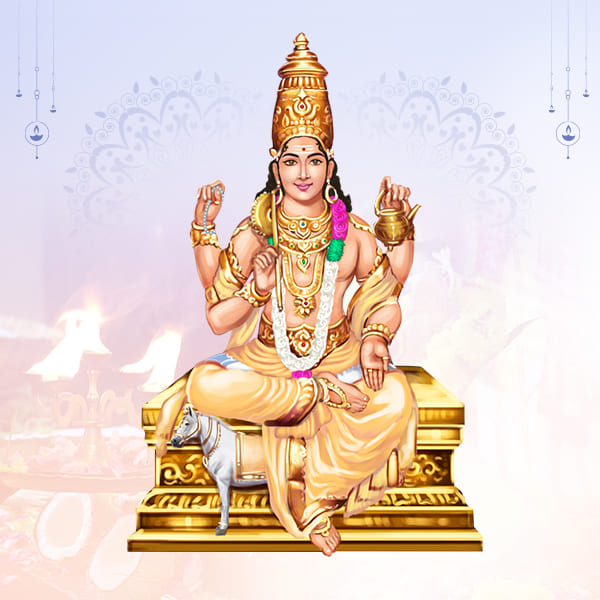
As we move through the monsoon of 2026, the skies are preparing for a rare celestial event that has traditional astrologers reaching for their Brihat Parashara Hora Shastra. In mid-July 2026, Guru (Jupiter) and Shukra (Venus) will come within one degree of each other in Simha Rashi (Leo), forming a Graha Yuddha — planetary war. What makes this conjunction extraordinary is that Jupiter will be in vakri (retrograde) motion while Venus remains direct, creating an Apasavya Graha Yuddha. This is not your standard benefic meeting; the winner-loser dynamics here can flip the usual script of prosperity and harmony, making it essential to understand how this graha yuddha will play out in your own kundali.
What Is Graha Yuddha? Decoding Planetary War in Jyotish
In Vedic astrology, not every conjunction is friendly. When two planets occupy the same sign, they are said to be in yuti (conjunction). But when they move within one degree of each other, Brihat Parashara Hora Shastra elevates the situation to Graha Yuddha — a literal war in the heavens. Think of yuti as two ministers sharing an office, pooling resources and coordinating policy. Yuddha, on the other hand, is those same ministers fighting for the same chair, the same budget, and the same microphone. The energy shifts from cooperative blending to zero-sum competition, and the house in your chart where this occurs becomes a temporary battlefield where compromise is difficult.
The classical texts tell us that the defeated planet — termed yuddha-hata — loses its vitality much like a planet that is asta (combust). Its significations, or karakatva, suffer a noticeable dip until the warring planets separate by more than one degree. For example, if Venus loses the war, you may notice strain in romantic relationships, a creative block in artistic pursuits, or minor friction in financial dealings. If Jupiter loses, matters of children, higher wisdom, spiritual teaching, and sustained wealth may feel blocked or delayed. The winner, conversely, does not merely survive; it absorbs a portion of the loser’s strength, becoming more dominant in the chart for that brief period.
It is important to remember that Graha Yuddha is fundamentally a gochara (transit) phenomenon. It does not rewrite the promises of your birth chart; it colors the current moment with a specific tension. As the Jataka Parijata reminds us, transit effects are like passing clouds — they can obscure the sun, but they cannot remove it. Still, when two of the most benefic planets in the sky go to war, even a temporary cloud can cast a noticeable shadow on the areas they rule. The wise approach is not fear, but viveka — the discriminating awareness that allows you to navigate the storm while it lasts.
Another subtle point is that Graha Yuddha is different from a simple weakness in Shad Bala calculations. In a strength assessment, both planets lose some points because they are busy fighting. This means that even the winner is not at full strength — it is merely the lesser-wounded soldier. Therefore, during a yuddha, it is wise to avoid major new beginnings in affected areas and instead focus on preservation and remedy.
Guru Shukra Graha Yuddha in July 2026: The Simha Rashi Conjunction
In mid-July 2026, Jupiter — already vakri in Leo since the preceding months — will be joined by a direct-moving Venus. While a typical Guru Shukra Yuti is celebrated by Jyotish texts for creating Dhana Yoga and marital harmony, a yuddha between them tells a very different story. Here, the forces of dharma (Jupiter) and kama (Venus) clash openly. You might feel an internal tug-of-war between your responsibilities and your desires, or between spiritual discipline and the craving for sensory comfort. Where you expected ease, you may find negotiation; where you hoped for abundance, you may need to choose between two worthy things.
Simha Rashi adds its own regal flavor to this conflict. Ruled by Surya (the Sun), Leo is a sign of authority, self-expression, courage, and pride. Jupiter is generally comfortable here because the Sun is Jupiter’s natural friend; the Guru can teach with confidence in the sign of the king. Venus, however, is entering territory ruled by an adversary. This underlying sign dignity already tilts the scales in subtle ways, but the full picture only emerges when we examine the BPHS rules. What matters on a practical level is that the war is happening in a fiery, fixed sign — meaning the tension can be stubborn, dramatic, and ego-driven. You may notice people around you becoming unusually insistent about their viewpoints, especially on matters of money, morality, education, and romance.
The exact nakshatra matters too. If the yuddha occurs in Magha, Ketu’s influence adds a note of detachment and ancestral karma to the conflict. If it falls in Purva Phalguni, Venus enjoys a slight home-field advantage, which may soften its defeat but also intensify the drama, since this nakshatra is deeply associated with romance and luxury. Either way, the Leo fire turns the disagreement into a spotlight event — there is no hiding from it.
This transit also arrives close to the solar energy of Simha Sankranti 2026, amplifying themes of leadership and identity. If you have important planets in Leo — your Lagna, Moon, or Sun — this yuddha will feel deeply personal. It is a good time to practice humility and avoid ego battles that serve no higher purpose. The question this conjunction asks is simple but profound: Can your wisdom and your pleasure coexist, or is one trying to drown out the other?
Apasavya Yuddham: When the Retrograde Planet Fights
Classical commentators distinguish between Savya and Apasavya Yuddham. In a standard Savya yuddha, both planets are moving in their natural direct motion, and the winner is decided by straightforward BPHS criteria like brightness and size. An Apasavya Yuddham occurs when one combatant is vakri (retrograde). This is exactly what we face in July 2026: Jupiter is retrograde, Venus is direct. The retrograde planet carries heightened chesta bala (motive strength), making it an unpredictable fighter — like a wrestler who changes stance mid-match, or a teacher who returns to the classroom to correct a lesson already taught.
In normal circumstances, Venus would win on prabha (brightness) because Shukra is the brightest planet after the Sun and Moon. Jupiter would win on tara (apparent size) because Guru’s disc is visibly larger than any other graha. In an Apasavya scenario, these rules do not simply cancel out; they create a stalemate where both planets remain wounded longer than usual. The retrograde energy refuses to concede, and the direct planet keeps pressing forward. For us on Earth, this can manifest as recurring arguments that do not resolve, financial decisions that get reversed, or a feeling that you are taking one step forward and two steps back in relationships. The war does not end quickly because one army is marching backward while still fighting.
From an observational perspective, an Apasavya Yuddha is also rarer than a Savya one, because retrograde periods are limited and the retrograde planet must still be within one degree of another planet. When it does happen, the energy feels like a loop — the same issue keeps returning until the retrograde planet finally turns direct or moves away. In this case, Jupiter will remain retrograde for some time, so the post-yuddha shadow may linger slightly longer than usual, even after Venus moves ahead.
It is also worth noting that Jupiter’s retrograde phase in Leo is already a time for reviewing one’s dharma and life path, as we discussed in our guide on Jupiter Retrograde in Leo. When this review period collides with Venus’s direct motion, the universe is essentially asking you to audit your values. Are your pleasures aligned with your purpose? Is your generosity balanced by your desire for comfort? The answer may not come easily, but the question itself is the hidden gift of this transit.
How BPHS Determines the Winner and Loser of Graha Yuddha
Brihat Parashara Hora Shastra provides a clear hierarchy to judge who wins a planetary war. The text considers a series of sequential criteria, moving from visual observation to astrological dignity. When we apply these rules to the July 2026 conjunction, an interesting picture emerges — one that explains why this particular Graha Yuddha is so tricky to call.
- Prabha (Brightness): The planet with brighter rays dominates. Venus is dazzling; Jupiter is comparatively subdued. On this count, Shukra takes the lead.
- Tara (Apparent Size): The one with the larger visible disc wins. Jupiter is physically larger than any other graha. Here, Guru dominates.
- Sthana Bala (Positional Strength): The planet in a more favorable sign gains advantage. Simha is friendly to Jupiter but inimical to Venus. This strongly favors Guru.
- Vakra (Retrogression): In an Apasavya Yuddham, the retrograde planet’s chesta bala acts as a tie-breaker, giving Jupiter additional resilience.
| BPHS Criterion | Favors | July 2026 Context |
|---|---|---|
| Prabha (Brightness) | Venus (Shukra) | Shukra is brightest graha after Surya and Chandra |
| Tara (Apparent Size) | Jupiter (Guru) | Guru’s disc is largest among navagraha |
| Sthana Bala (Sign Dignity) | Jupiter (Guru) | Simha is friendly to Guru; inimical to Shukra |
| Vakra (Retrogression) | Jupiter (Guru) | Vakri status elevates Chesta Bala in Apasavya Yuddham |
As you can see, the score is effectively tied on the primary visual criteria, but Jupiter gains a decisive edge in sign dignity because Simha is friendly to Guru while being inimical to Shukra. Additionally, in an Apasavya Yuddham, the retrograde status of Jupiter elevates its motive force, giving it further staying power. Most traditional astrologers would therefore judge Jupiter as the likely victor, with Venus taking the role of the yuddha-hata planet.
What does a defeated Venus mean for you practically? For a few days surrounding the exact conjunction, Venusian matters — relationships, luxury, artistic flow, and emotional harmony — may feel subdued. You might find your partner less communicative, a creative project hitting a wall, or an unnecessary expense popping up. The key is not to panic. As Phaladeepika teaches, the effects of planetary war are khanija (mineral-like) — hard and sharp, but temporary. They carve out space for new growth rather than destroy the mountain. If you have a strong Venus in your natal chart, it will bounce back quickly once the war ends.
Zodiac-Wise Effects: Simha Rashi and the 12 Houses
To understand how this Graha Yuddha affects you personally, locate Simha Rashi (Leo) in your own chart. From your Chandra Rashi (Moon sign), count the house Leo occupies. That house becomes the epicenter of the tension. Here is a quick guide to the themes each sign will navigate during this rare transit:
| Chandra Rashi | House of Yuddha | Primary Theme to Navigate |
|---|---|---|
| Mesha (Aries) | 5th House | Romance, children, investments, speculationiblity |
| Vrishabha (Taurus) | 4th House | Home, mother, vehicles, emotional peace |
| Mithuna (Gemini) | 3rd House | Courage, siblings, communication, short travel |
| Karka (Cancer) | 2nd House | Family wealth, speech, food habits |
| Simha (Leo) | 1st House | Health, identity, confidence, physical energy |
| Kanya (Virgo) | 12th House | Expenses, foreign connections, sleep, isolation |
| Tula (Libra) | 11th House | Gains, elder siblings, social network |
| Vrishchika (Scorpio) | 10th House | Career, status, authority, fatherly duties |
| Dhanu (Sagittarius) | 9th House | Fortune, father, higher learning, dharma |
| Makara (Capricorn) | 8th House | Sudden changes, in-laws, occult, longevity |
| Kumbha (Aquarius) | 7th House | Marriage, partnerships, open enemies |
| Meena (Pisces) | 6th House | Health, debts, competition, daily routine |
Fire Signs (Aries, Leo, Sagittarius) feel the yuddha in dharma and identity houses — 5th, 1st, and 9th respectively. This is a test of who you are versus what you believe. If you are a Leo Moon, the war is in your 1st house; guard your health, avoid arrogant decisions that burn bridges, and do not launch new personal projects until the skies clear. Aries natives should avoid speculative investments and be extra patient with children. Sagittarius natives may feel a temporary questioning of their faith or philosophy; do not argue with your mentor during this window.
Earth Signs (Taurus, Virgo, Capricorn) deal with security and release — 4th, 12th, and 8th houses. Taurus natives should be gentle with family matters and avoid buying new vehicles. Virgo natives may feel restless or experience disturbed sleep; avoid making foreign commitments. Capricorn natives must avoid risky investments, lending money, or engaging in insurance disputes during this brief window.
Air Signs (Gemini, Libra, Aquarius) face tension in desire-driven and communicative houses — 3rd, 11th, and 7th. Aquarius Moons, in particular, should watch relationship dynamics; the 7th house yuddha can trigger ego clashes with a spouse or business partner. Gemini natives should choose their words carefully with siblings. Libra natives may see a slight delay in income or gains from network; do not chase payments aggressively.
Water Signs (Cancer, Scorpio, Pisces) navigate artha and health houses — 2nd, 10th, and 6th. Cancer natives may feel a pinch in finances or family speech; avoid harsh words at dinner. Scorpios could see temporary friction at work with a superior; practice humility. Pisces natives should focus on routine health check-ups rather than ignoring minor ailments. Remember, these effects are fleeting — intense for a window of days, not months. It is also wise to check if this yuddha activates any natal planets you have in Leo. If your natal Jupiter or Venus sits in Simha, the transit will speak directly to those karakatvas in your life. For a precise check, generate your chart and see which house Simha rules for you.
Remedies for Guru Shukra Graha Yuddha: Mantra, Daan, and Lifestyle
Vedic astrology is never just about prediction; it is about parihara (remedy). Because this yuddha pits two benefics against each other, the goal is to pacify both and avoid favoring one over the other until the war subsides. Here are specific, time-tested measures you can adopt during the sensitive window of mid-July 2026:
💡 Quick Tip: Graha Yuddha effects are strongest when the planets are within 1 degree. Use your detailed Kundali to check if this yuddha falls over your Lagna, Moon, or any sensitive degree in your chart. The closer to your natal planets, the more personally you will feel it.
Mantra: For Jupiter, chant “Om Gram Grim Graum Sah Guruve Namah” 108 times on Thursday. For Venus, chant “Om Dram Dreem Draum Sah Shukraya Namah” 108 times on Friday. If you prefer simpler Vedic chants, “Om Namo Bhagavate Vasudevaya” for Guru and “Om Shum Shukraya Namah” for Shukra are equally effective. Recite with a calm mind and a clear intention of peace between these energies. You can also chant the Sri Suktam on Friday evenings to soothe Venus, and the Vishnu Sahasranama on Thursdays to strengthen Jupiter’s wisdom aspect.
Gemstones: Avoid wearing Yellow Sapphire (Pukhraj) and Diamond or White Sapphire together during the yuddha window. Their energies are already clashing in the sky, and wearing both can amplify inner conflict. If your chart strongly favors one planet, you may wear that single gem after consulting a Jyotishi, but when in doubt, wait until the planets separate by more than three degrees before combining them again.
Daan (Charity): On Thursday, donate yellow clothes, chana dal (gram), turmeric, and a small piece of gold or yellow cloth to a learned person. On Friday, donate white clothes, rice, sugar, and silver to a young girl or a woman in need. Feeding a Brahmin on Thursday and a Kanya (young girl) on Friday is a classical way to honor Guru and Shukra respectively. If possible, offer sweet rice to a cow on Friday — gau seva is said to please both Jupiter and Venus, as the cow represents nourishment and gentle abundance.
Fasting: Observe a mild fast on Thursday with yellow moong dal or fruit. On Friday, observe a fast with white rice or sweet dishes, then offer them as prasada. On the exact day of the closest conjunction — check your local Panchang for the exact muhurta — consider a half-day fast and read the Vishnu Sahasranama or Sri Suktam.
Puja: Perform a Lakshmi-Narayana puja at home on Friday evening, placing yellow and white flowers together before the image. Light a ghee lamp and offer kheer (sweet rice pudding). If possible, sponsor a small havan with both Guru and Shukra beeja mantras on the Thursday before the exact yuddha. If you are currently running Jupiter or Venus Dasha or Antardasha, these remedies become even more important, as the transit will activate the natal promise of those planets directly.
Lifestyle: Postpone major financial investments, signing property deals, or fixing wedding dates within the tight 3-to-5-day window of the yuddha. Practice satya (truthfulness) and ahimsa (non-harm) in speech. If a conflict arises between your teacher and your partner, or between your principles and your pleasures, choose silence over reaction. This is also an excellent time to reduce luxury spending and instead invest in knowledge — buy a spiritual book rather than a designer accessory. Sleep early, avoid intoxicants, and speak gently to your spouse and elders.
🌟 Remember: A Graha Yuddha is temporary — usually intense for only a few days. As Phaladeepika reminds us, the effects of planetary war are khanija (momentary) rather than foundational. Do not make permanent decisions based on a week-long transit. Patience is itself the best remedy.
🔮 See Where the Yuddha Falls in Your Chart
Don’t guess — know exactly how the Guru Shukra Graha Yuddha will affect your personal horoscope. Generate your detailed Vedic Kundali on RashiByte and check the Leo house in your chart.
Get Your Free Kundali →Or ask our AI astrologer for personalized guidance on this rare transit.
The Guru Shukra Graha Yuddha of July 2026 is a powerful reminder that even the most benefic planets have their disagreements. By understanding the Apasavya Yuddham dynamics, respecting the BPHS rules, and applying targeted parihara, you can navigate this Leo transit with wisdom rather than worry. Keep your intentions pure, your charity consistent, and your decisions measured. The war in the sky is temporary, but the clarity you gain from handling it well will last far longer.
— Written by RashibyteAI
No comments yet. Be the first to share your thoughts!