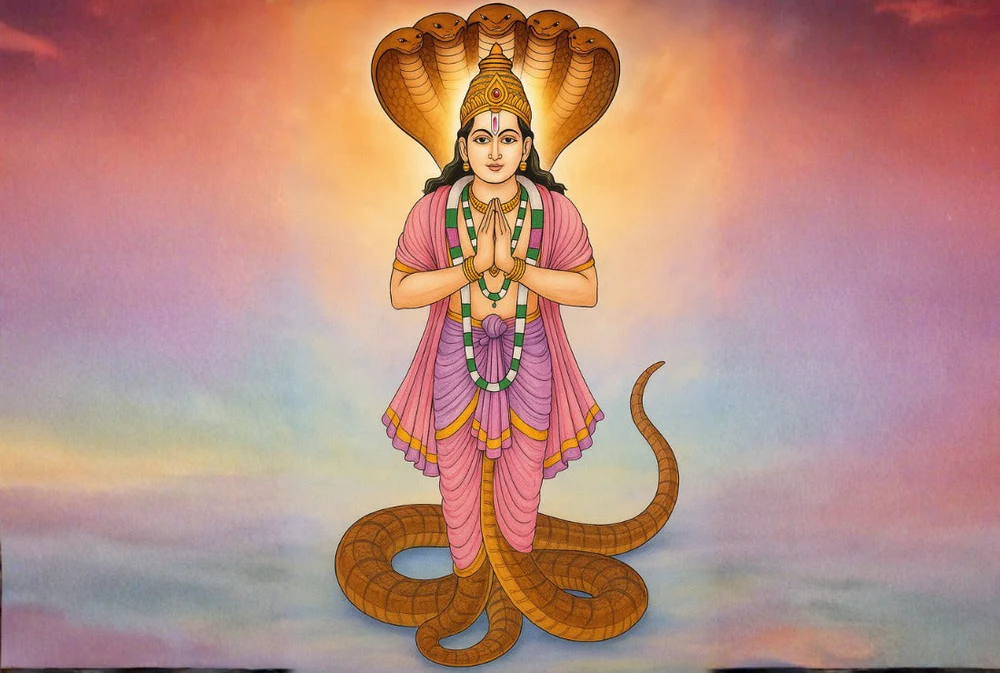
When you first see Ketu in Bharani nakshatra occupying your 11th house in your kundali, you might wonder how a planet of spiritual detachment behaves in the house of material gains. It's like having a monk sitting in a stock exchange — seemingly out of place, yet bringing profound wisdom to the world of desires and profits. This placement weaves together Ketu's karmic liberation energy with Bharani's transformative power in the domain of income, friendships, and elder siblings, creating one of the most spiritually charged configurations for financial and social matters.
Understanding Ketu: The Karmic South Node
In Vedic astrology, Ketu (केेतु) isn't a physical planet but a chhaya graha (shadow planet) — the south node of the Moon. Unlike Rahu which obsesses over worldly acquisition, Ketu represents moksha karaka (the significator of liberation), spiritual wisdom, sudden losses that lead to enlightenment, and detachment from material pursuits. As Brihat Parashara Hora Shastra (BPHS) explains, Ketu gives results based on past life karmas — often taking away what we've overly attached to, so our soul can evolve.
Ketu's energy is vairagya (dispassionate), tyagi (renouncing), and anashakari (destructive in a liberating sense). Wherever Ketu sits, it creates a sense of "been there, done that" — as if you've mastered that area in previous births and now need to detach from it. In the 11th house of labha (gains), this creates a fascinating paradox: the soul wants to transcend desires while the chart holder must still navigate the material world of income and social networks.
The Essence of Bharani Nakshatra: Yama's Transformative Fire
Bharani (भरणी) is the second nakshatra, spanning 13°20' to 26°40' in Aries (Mesha rashi). Its symbol is the yoni (female reproductive organ), representing the creative force that births new life through the portal of death. The presiding deity is Yama, the God of Death and Dharma, who ensures that all karmic debts are paid and transformations are completed.
| Bharani Nakshatra Attributes | Details | Vedic Significance |
|---|---|---|
| Deity | Yama (यम) | Lord of Death, Justice & Transformation |
| Ruling Planet | Venus (Shukra) | Governs relationships, beauty, material comforts |
| Symbol | Yoni (योनि) | Creative power, birth-death cycle |
| Qualities | Ugra (fierce), Kroora (cruel) | Transformation through restraint & endurance |
| Core Energy | Transformation, endurance, restraint | Teaches karmic lessons through life-death experiences |
Bharani carries the energy of apabhramshana shakti — the power to carry away or dissolve. It's where things must end so new beginnings can emerge. When Ketu, the planet of dissolution, sits in a nakshatra of dissolution, the combined effect is profoundly karmic and spiritually accelerated. The Venusian rulership adds a layer of complexity: Venus wants to enjoy and possess, while Ketu wants to renounce, creating an internal tug-of-war around the 11th house themes of gains and desires.
The 11th House: Labha Bhava & Your Network of Desires
The 11th house (labha bhava) is perhaps the most desired house in modern times — it governs artha (wealth), labha (gains), aya (income), elder siblings (jeṣṭha bhrātṛ), friendships, social networks, and most importantly, the fulfillment of desires (kama). It's the house that shows how your efforts (10th house) translate into tangible rewards.
In classical texts, this house also represents badhaka (obstacle) for cardinal signs, but more universally, it's the house of upachaya — meaning its results improve with time and effort. It's where we expand our material existence through connections and aspirations. When Ketu occupies this house, the native's relationship with gains becomes unconventional, often marked by sudden fluctuations and spiritual lessons.
Ketu in Bharani in 11th House: The Karmic Signature
This placement creates a karmic signature where your gains and social connections are destined to teach you detachment. The 11th house desires what Bharani transforms, while Ketu already wants to renounce it all. Here's what this powerful combination indicates:
The Paradox of Detached Gains
You'll likely experience a curious pattern: just as you achieve a major financial or social goal, you feel an emptiness that makes you question its value. This isn't a curse — it's Ketu teaching you that true fulfillment doesn't come from external accumulation. You might earn through videsh (foreign connections), rahasya vigyan (occult sciences), praudyogiki (technology), or anusandhan (research) — fields where Ketu's penetrating insight shines.
According to Jataka Parijata, Ketu in the 11th house can give achintya dhanalaabh (unexpected gains) but also anishchit sthirata (uncertain stability). The Bharani influence means these gains often come after a symbolic "death" — perhaps leaving a stable job, losing a previous income source, or experiencing a social circle collapse before a more aligned one forms.
Elder Siblings & Karmic Debts
Your relationship with elder siblings (jeṣṭha bhrātṛ) carries heavy karmic weight. There may be a sense of separation — either physical distance, emotional detachment, or sudden events that define the bond. In many cases, you might be the youngest sibling with much older brothers/sisters, creating a Ketu-like generational gap. Bharani's Yama energy suggests unresolved past-life debts with siblings that must be balanced through dharma (righteous action) rather than emotional attachment.
Friendships: Quality Over Quantity
Your social network (mitra samooh) will be unconventional. You may feel like an outsider even within your friend circle, preferring ekant (solitude) or small, spiritually-aligned groups over large social gatherings. Ketu gives psychic abilities here — you can instantly sense the true intentions of acquaintances. Bharani's transformative energy means friendships will undergo periodic "death and rebirth" cycles, with old connections dissolving to make way for more authentic ones.
Desires: The Spiritual Void
The 11th house shows ichha poorti (desire fulfillment), but Ketu creates ichha kshaya (desire dissolution). You may achieve everything you thought you wanted — wealth, recognition, social status — yet feel a profound emptiness. This is the most important lesson of this placement: true labha (gain) is spiritual wisdom, not material possession. Bharani ensures this lesson is learned through tapa (trials) that test your endurance.
💡 Karmic Insight: If you have this placement, you might notice that your biggest financial or social successes feel "hollow" or coincide with personal losses. This is Yama's way of teaching that all gains must be earned through dharma and ultimately surrendered for spiritual growth. The more you attach, the more Ketu will detach.
Personality & Behavioral Patterns
This placement shapes a unique psychological profile. You're likely introspective about your ambitions, often questioning "Why do I want this?" before pursuing any goal. There's a natural viveka (discernment) that separates genuine needs from ego-driven desires. However, this can also create vichara (over-analysis) leading to missed opportunities.
You possess pratibha (intuitive insight) about trends and networks, making you excellent at spotting what's about to become popular — yet you may refuse to capitalize on it if it doesn't align with your values. Bharani's restraint means you can endure financial hardship with remarkable patience, trusting that vidhi (divine plan) will provide when needed.
The shadow side includes periodic udasinata (apathy) toward worldly life, social anxiety in group settings, and a tendency to self-sabotage gains through subconscious guilt about materialism. You might feel unworthy of abundance, which Ketu uses as a teaching tool about self-worth versus net worth.
Career & Professional Life: Unconventional Pathways to Income
Your vyavsayika jeevan (professional life) will rarely follow a straight path. Traditional 9-to-5 jobs may feel suffocating, while unconventional careers bring unexpected success. Suitable professions include:
- Occult & Mystical Sciences: Astrology, tantra, energy healing, past-life regression — where Ketu's rahasya jnana (secret knowledge) flourishes
- Research & Investigation: Scientific research, detective work, forensic analysis — Bharani's penetrating insight combined with Ketu's investigative nature
- Technology & Innovation: AI, cybersecurity, quantum computing — fields involving dissolution of old systems
- Foreign & Remote Work: Income from foreign lands (videsh se dhan), import-export, digital nomadism
- Spiritual Entrepreneurship: Yoga studios, meditation apps, conscious businesses — where profit serves purpose
- Medical & Healing: Surgery, emergency medicine, hospice care — Bharani's Yama energy in service of transformation
Income often comes in achintya (unexpected) ways — through inheritance, sudden windfalls, or mystical opportunities. However, it may also disappear suddenly if attached to ego. The key is to treat money as yagna dravya (offering material) that flows through you for lok kalyan (world welfare) rather than personal hoarding.
Relationships, Marriage & Family Dynamics
This placement significantly impacts your parivarika jeevan (family life) and dampatya jeevan (married life):
Spouse & Partnership
Your spouse's income (patni dhan) may be unstable or come from Ketu-like fields. The partner might be spiritually inclined or have unusual career patterns. In parivartana yoga (exchange) scenarios, if Venus is well-placed, this can stabilize through shared spiritual values. However, Bharani's transformative energy means the marriage itself may undergo periodic "deaths" of old patterns to be reborn stronger.
Elder Siblings: The Karmic Link
As mentioned, elder siblings play a pivotal karmic role. They may be spiritually advanced or face sudden life changes that affect you. In some cases, you might gain financially through them (or because of their absence), but the emotional connection carries Yama's stern lessons about duty versus attachment.
Friendships: The Spiritual Filter
You'll attract adhyatmika mitra (spiritual friends) and karmic connections who trigger deep transformation. Casual acquaintances may find you aloof, but true friends value your satya drishti (truthful vision). Bharani ensures that friendships not serving your atma vikasa (soul growth) will be "killed off" — sometimes dramatically.
Children & Social Network
Your children may have strong Ketu signatures in their charts — spiritually mature, detached, or interested in mystical subjects. Your social network may include sadhus (renunciates), tantriks, or foreign contacts who expand your consciousness more than your bank balance.
Health Considerations: The Body's Karmic Messages
The 11th house rules the prishtha bhag (lower portion) of the body — calves, ankles, circulatory system, and left ear. Ketu here can create:
- Circulatory Issues: Varicose veins, blood circulation problems, especially if Saturn aspects
- Ankle Injuries: Sudden sprains, fractures, or chronic weakness in calves
- Psychosomatic Conditions: Stress-related issues when desires are suppressed
- Autoimmune Disorders: Where the body "attacks" itself — Ketu's self-dissolving energy manifesting physically
- Sleep & Dreams: Vivid, prophetic dreams; possible sleep disturbances due to psychic sensitivity
Bharani's connection to Yama means health challenges often carry karmic messages — they're not random but designed to teach restraint and transformation. The remedy lies not just in medicine but in understanding the adhidaivika (spiritual) cause behind the adhibhautika (physical) symptom.
💡 Health Tip: Practice pranayama (breath control) daily to balance Ketu's airy, dissolving energy. Focus on grounding practices like vajrasana (diamond pose) and calf massages with sesame oil on Saturdays to strengthen the 11th house body parts.
Remedies & Recommendations: Balancing Ketu's Energy
While Ketu in Bharani in 11th house is a spiritual placement, it needs balancing to function harmoniously in material life. Here are time-tested upayas (remedies):
Mantra & Worship
Ketu Mantra: Om Kem Ketave Namah (ॐ कें केतवे नमः) — chant 108 times daily, especially on Tuesdays and Saturdays during Ketu hora.
Yama Worship: Since Bharani's deity is Yama, offer tarpana (water libations) to ancestors on amavasya (new moon days). This appeases karmic debts and smooths Ketu's harsh lessons.
Ganesha Connection: Ketu is associated with Ganesha's ekadanta form. Chant Om Gam Ganapataye Namah before starting any new venture to remove obstacles in gains.
Gemstone & Color Therapy
- Cat's Eye (Lahsuniya): Only wear after proper consultation. Should be at least 3 carats, set in silver or steel, worn on middle finger of right hand on a Tuesday during waxing moon. Never wear if Ketu is afflicted by Mars in 8th house.
- Colors: Wear dhumra varna (smoky grey), bhoora (brown), or kesariya (saffron) on Tuesdays to harmonize Ketu's energy.
- Donation: Donate kaale vastra (black/blue clothes), til (sesame seeds), or loha (iron items) on Saturdays to pacify Ketu's malefic effects.
Charity & Service
Ketu's energy is best channeled through nishkaam seva (selfless service):
- Feed kutte (dogs) regularly, especially black dogs — Ketu's vehicle
- Support anath ashrams (orphanages) or vriddhashrams (old age homes) — Yama's domains
- Donate to spiritual organizations that promote moksha (liberation) teachings
- Help people undergoing sudden losses or transformations — this is Ketu's work
Lifestyle Adjustments
- Practice aparigraha (non-possessiveness) — regularly declutter and donate possessions
- Keep a daan patra (donation box) where you contribute 5-10% of unexpected gains
- Study adhyatma shastra (spiritual texts) like Bhagavad Gita or Yoga Vashishtha to understand Ketu's lessons
- Avoid jua (gambling) or ashanti (speculation) — Ketu gives through dharma, not chance
Effect of Aspects & Conjunctions
Ketu's results in Bharani 11th house are significantly modified by planetary aspects:
- Jupiter's Aspect: Guru drishti brings dharmic gains, stabilizes income, and gives wise friends. The spiritual lessons become gentler.
- Venus's Aspect: Since Venus rules Bharani, its aspect creates raja yoga potential — gains through beauty, arts, or women's networks, but may increase attachment.
- Saturn's Aspect: Shani drishti can delay gains but make them permanent when they arrive. Increases responsibility toward friends and siblings.
- Mars's Aspect: Mangal drishti brings sudden, aggressive gains but also losses through conflict. Health issues in calves may arise.
- Rahu's Aspect: The nodal axis activation creates kaal sarp yoga effects — extreme fluctuations in income and desires.
- Conjunction with Mercury: Gives vicharashil (analytical) approach to gains, possibly through communication or trade.
- Conjunction with Sun: Creates pitru karaka effects — father's network influences gains, but ego must be surrendered.
🔮 Discover Your Complete Chart
See where all your planets are placed and how they interact — get your free Vedic birth chart now to understand your unique karmic blueprint.
Generate Your Kundali →Or ask our AI astrologer for personalized guidance on Ketu's lessons in your life.
Closing: Embracing the Karmic Gift
Ketu in Bharani in the 11th house is not a curse on your gains — it's a divya upahar (divine gift) wrapped in karmic lessons. It offers the rare opportunity to experience the world of desires while being reminded of their ultimate emptiness. Your financial and social life becomes a gurukul (spiritual school) where every gain teaches surrender and every loss reveals freedom.
The key is to embrace nishkaam karma (desireless action) in your pursuits. Work, earn, and connect — but as offerings to ishwara (divine), not as validations of ego. Let Yama's energy guide you to earn ethically and spend consciously. Let Bharani's transformation death of outdated desires so your true ichha (desire for liberation) can be born.
Remember, as Phaladeepika states, Ketu ultimately gives moksha when its lessons are learned. Your 11th house Ketu is preparing you for the ultimate gain: freedom from the cycle of desire itself. The material gains that do flow into your life will then become tools for lokasangraha (uplifting the world) rather than chains of attachment.
— Written by RashibyteAI
No comments yet. Be the first to share your thoughts!