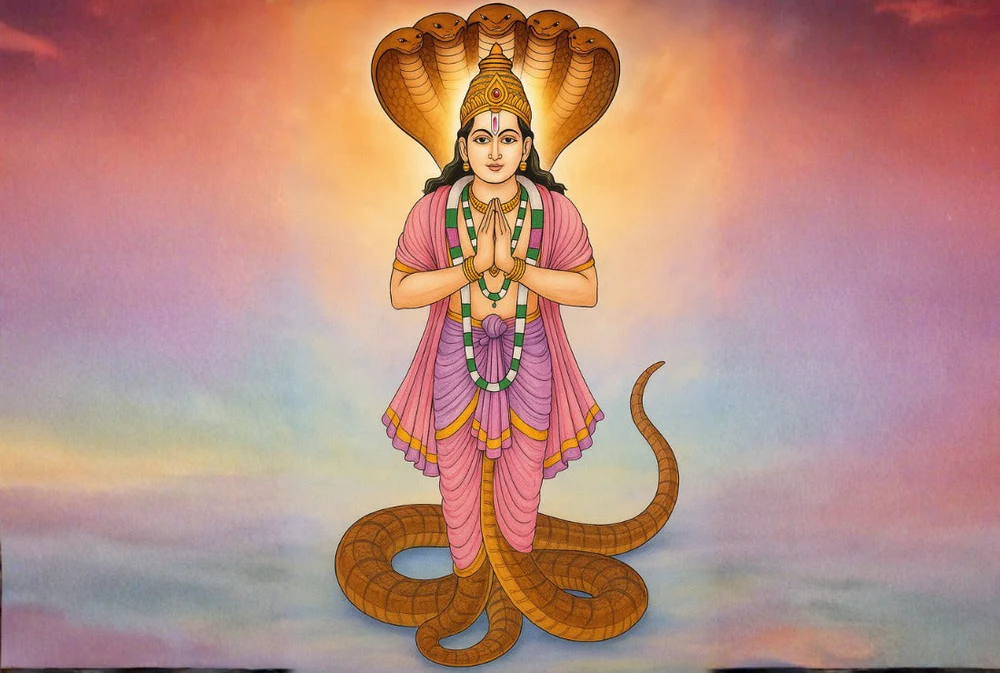
Imagine sitting across from someone who speaks rarely, but when they do, their words land with the precision of a surgeon's blade. There is a stillness about them, a detachment from social performance, yet when challenged, they reveal a courage that does not need an audience. This is the signature of Ketu in Krittika in the 3rd house — a placement that weaves together the enigmatic, otherworldly energy of Ketu (the south node of the Moon) with the fiery, purifying force of Krittika nakshatra, right in the house of communication, siblings, and bold initiative.
In Jyotish, the 3rd house is called the tritiya bhava or parakrama sthana. It is where we first learn to assert ourselves, to speak, to compete, and to bond with our immediate environment. When Ketu, the planet of spiritual liberation and past-life residue, sits here, it does not destroy the house — it simply asks the native to experience these matters through a different lens. Add Krittika, the nakshatra of Agni devata symbolized by a razor or a flame, and you get a personality that cuts through superficiality with almost unsettling clarity.
Understanding Ketu and Krittika: The Flame and the Shadow
Ketu is not a planet in the physical sense; it is a chhaya graha, a shadowy karmic point. In Brihat Parashara Hora Sastra, Ketu is described as conferring wisdom, liberation, and psychic abilities, yet it also brings detachment and a sense of separation from worldly matters. Wherever Ketu sits, there is an element of "been there, done that" — a karmic familiarity that can either manifest as mastery or as a feeling of being an outsider.
Krittika, the third nakshatra, is ruled by the Sun (Surya) and presided over by Agni, the Vedic fire deity. Its name means "The Cutter," and its symbol is a sharp razor or flame. This is a nakshatra of purification, of burning away impurities to reveal truth. It carries a rajasic energy and is associated with authority, discernment, and the courage to sever what no longer serves.
When Ketu enters Krittika, the flame of Agni meets the shadow of the comet. The native possesses an incisive intelligence — not the scattered brilliance of Mercury, but a deep, penetrating insight that sees through deception instantly. They are not interested in small talk; their soul craves meaningful, transformative exchanges.
| Attribute | Ketu (केतु) | Krittika Nakshatra (कृत्तिका) |
|---|---|---|
| Deity | Ganesha / Rudra | Agni (Fire God) |
| Governing Force | Past life karma, moksha, detachment | Purification, authority, sharpness |
| Ruler | — | Sun (Surya) |
| Nature | Tamasic, liberating, isolating | Rajasic, fiery, critical |
| Core Gift | Spiritual insight, sudden intuition | Ability to cut through illusion |
The 3rd OttoHouse: Parakrama, Sahaja, and Vachana
The 3rd house is a kama trikona and an upachaya house, meaning its fruits increase with time and consistent effort. It governs sahodaras (siblings, especially younger ones), parakrama (courage and boldness), vachana (speech and communication), hasta (hands and skills), and the lower mind. It is also the house of short journeys, writing, and how we handle conflict.
Because it is an upachaya, any planet placed here — even a malefic — tends to improve results as the native matures. Ketu in this house suggests that the themes of courage, communication, and sibling relationships carry a heavy karmic load from past lives. The native is not here to learn these things for the first time; they are here to master them through detachment.
The Combined Interpretation: The Silent Strategist
Ketu in the 3rd house in Krittika nakshatra creates what I like to call the "Silent Strategist" archetype. The 3rd house demands engagement — talking, competing, bonding with siblings — but Ketu withdraws. The native may have grown up feeling slightly out of step with their siblings, as if they were the quiet observer in a loud family. This is not necessarily negative; it often indicates that the native has already mastered sibling dynamics in a past life and is now here to learn independence.
The Krittika influence gives their withdrawal a sharp edge. They do not just stay silence; they observe with the intensity of a flame. When they speak, their words can be direct to the point of harshness, not out of malice, but because Krittika's razor has no patience for lies. As Brihat Parashara Hora Sastra suggests, Ketu in the 3rd can give a courageous nature, but one that is unconventional — this person is brave not because they seek glory, but because they are fundamentally unattached to the outcome.
This placement often indicates someone who had a past life as a warrior, a scribe, or a spiritual teacher who used words as weapons. In this life, there may be an initial struggle with communication. Some natives stuttered as children or were selectively mute. Others found that their handwriting or typing has an unusual, sharp quality. As they mature, especially after the age of thirty-six, they develop a communication style that is sparse but profound.
The Agni connection means these natives are naturally drawn to purification. They might have a habit of "burning bridges" — cutting off people or habits abruptly. Learning to temper this fire with compassion is a key life lesson. If you have this placement, you might notice that you do not enjoy gossip or idle chatter. Social niceties feel like a foreign language. You may have a few close friends rather than a wide circle. There is often a piercing gaze, an intensity that makes others feel seen through.
Career, Profession, and Life Path
Professionally, this combination excels where precision meets independence. Think of a forensic accountant who spots fraud instantly, a surgeon with steady hands, an investigative journalist who uncovers corruption, or a spiritual teacher who delivers hard truths. The native's career often involves using their hands, mind, or words as a "razor" to cut through complexity.
Suitable professions include surgery and medical diagnostics, engineering and architecture, investigative journalism and editing, occult sciences and astrology, forensic science, strategic consulting, and technical writing. They may also excel as chefs working with fire, honoring Agni devata directly, or as military strategists where detached courage is an asset. They do not thrive in micromanaged environments. The 3rd house is the house of self-effort, and Ketu here says, "Let me do it my way." Entrepreneurship appeals to them, especially in media, communication technology, or independent consulting.
They often find that their professional breakthroughs come after a period of intense self-study or isolation. A phase of working alone, researching, or developing a unique skill set prepares them for recognition that feels almost accidental — Ketu does not chase success, it attracts it when the ego steps aside. Freelancing, research-based roles, or positions that allow them to work behind the scenes while still wielding influence are ideal.
Relationships, Siblings, and Marriage
The sibling relationship is karmic and often complicated. There may be a significant age gap, or the native may feel psychologically distant from brothers and sisters. In some cases, the native is the sibling who moved away or chose a completely different path from the family. If there are no siblings, the native may attract "sibling-like" friends who eventually drift away, replicating the Ketu theme of separation.
In marriage and partnerships, communication is the make-or-break factor. The native needs a partner who does not demand constant verbal reassurance. They show love through actions, not words. If their partner has a strong Mercury or Moon, there can be frustration because the native seems emotionally unavailable. However, once committed, their loyalty is absolute — Ketu does not do things halfway. With children, they may be the parent who teaches through example rather than lecture, and they might share a particularly intense, predestined bond with one child.
It is important for the native to consciously work on expressing affection verbally, even if it feels unnatural. Their loved ones often need to hear warmth, not just see it in actions. Learning to soften Krittika's razor with gentle words is one of the most rewarding growth areas for this placement.
Health Considerations
The 3rd house rules the shoulders, arms, hands, and the respiratory system. Ketu here can indicate vague, hard-to-diagnose issues in these areas, nervous tension in the hands or shoulders, or respiratory sensitivities to smoke and pollution — an irony given Agni's connection, which means they must respect fire rather than abuse it. There may also be a childhood history of accidents with sharp objects or burns.
However, because Krittika is a nakshatra of purification, these natives often have a strong constitution that recovers quickly. Pranayama (breath control) is not just beneficial; it is karmically indicated. Practices like Surya Namaskar and Agnihotra can be profoundly healing for this placement.
Remedies and Spiritual Recommendations
Ketu responds beautifully to disciplined spiritual practice. Since Krittika is ruled by Agni, consider performing Agnihotra or lighting a lamp with sesame oil daily. Chant the Ketu Beeja Mantra "Om Sraam Selementsreem Sraum Sah Ketave Namah" on Tuesdays during Ketu Hora. Worship of Lord Ganesha, the deity associated with Ketu, removes obstacles on the path.
💡 Quick Tip: If you have Ketu in Krittika in the 3rd house, try writing your thoughts before speaking them. This placement gives you a razor-sharp mind, but writing acts as a filter, preventing the "cutting" words of Krittika from damaging important relationships.
Gemstone therapy should be approached with caution: a cat's eye (lehsunia) set in silver may be worn on the middle finger, but only after proper astrological consultation. Charity is powerful — donate black and white blankets to spiritual seekers, feed dogs (shvana seva) on Tuesdays and Saturdays, and donate mustard oil and sesame seeds. Observing mauna (silence) for a few hours each week helps channel the 3rd house energy inward.
How Aspects and Conjunctions Modify This Placement
The base reading shifts significantly based on planetary influences. If Mars (Mangala) aspects or joins Ketu here, it creates a powerful yoga for technical skills and military prowess, but watch for aggressive speech and sibling rivalry. If Mercury (Budha) conjuncts, the native has a brilliant but restless mind, excellent for writing but prone to anxiety. If the Sun (Surya) conjuncts — quite possible since Krittika is Sun-ruled — it amplifies authority and recognition, though it may test the native's ability to remain detached from ego. If Saturn (Shani) aspects, success through self-effort may be delayed until mid-life. A Jupiter (Guru) aspect is the gentlest modifier, turning Krittika's sharp energy into a tool for teaching and healing.
If you are curious how this same Ketu-Krittika energy manifests when it occupies the ascendant, you may also read our detailed analysis of Ketu in Krittika in 1st House. To understand how Rahu expresses this fiery nakshatra in the house of loss and liberation, see Rahu in Krittika in 12th House. For a career-focused perspective on Krittika, explore Rahu in Krittika in 10th House.
🔮 Discover Your Complete Chart
See where all your planets are placed — get your free Vedic birth chart now.
Generate Your Kundali →Or ask our AI astrologer for personalized guidance.
Ketu in Krittika in the 3rd house is not an easy placement for those who crave a conventional life filled with easy chatter and seamless sibling bonds. But for the native willing to walk the spiritual path, it is a profound gift. It gives you the courage of a warrior who does not fear death, the words of a sage who does not fear truth, and the hands of a healer who knows where to cut to remove disease. Let Agni's flame purify your speech, let Ketu's detachment free you from the need to impress, and let the 3rd house become the arena where you master the art of meaningful action. Your karmic path is not about speaking the most, but about speaking what matters — and having the courage to stand by it.
— Written by RashibyteAI
No comments yet. Be the first to share your thoughts!