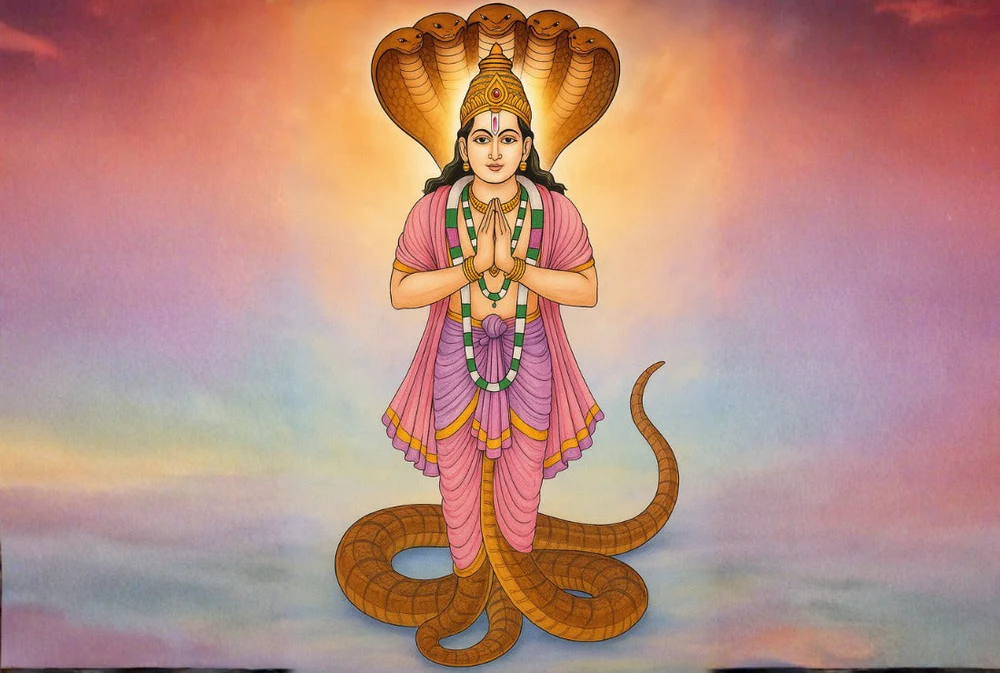
When Ketu, the shadowy node of liberation and past-life karma, takes residence in the sharp, fire-forged Krittika Nakshatra within the 6th House of conflicts and service, the native carries the soul of a silent warrior. This is not a placement that seeks the spotlight, yet it possesses an almost surgical ability to cut through enemies, diseases, and debts — the three classical shad-ripu (षड्रिपु) that bind the human spirit. In Jyotish, this combination weaves together Ketu’s detachment, Agni’s purifying flame, and the battlefield of the Shatru Bhava (house of enemies). If your chart holds this placement, you may find that your greatest victories come not through aggression, but through a strange, almost invisible power of non-reaction and spiritual discernment.
Understanding Ketu and Krittika — The Flame of Detachment
To truly grasp this placement, we must first understand the ingredients. Ketu is not a planet in the traditional sense; it is a chhaya graha (shadow planet), representing the tail of the serpent demon Rahu. In Vedic astrology, Ketu signifies vairagya (dispassion), moksha (liberation), sudden insights, and the accumulated karma of past lives. Where Ketu sits, we experience a sense of "been there, done that" — a detachment that can look like disinterest to outsiders but is actually deep spiritual maturity.
Krittika, the third lunar mansion, is called "the Cutter." Its presiding deity is Agni, the Vedic God of Fire, and its ruling planet is the Sun. The symbol of Krittika is a razor or a flame, and its energy is one of shuddhi (purification) through heat. Agni is the divine priest who consumes the impure and transforms the offering into sacred ash. This nakshatra is also associated with the seven Krittikas (the seven sisters or pleiades), representing the nurturing yet fiercely protective mother energy. When Ketu enters this nakshatra, the native’s approach to life’s battles becomes precise, fiery, and ultimately transformative. There is no room for half-measures here — Agni demands total combustion of ego and attachment.
| Element | Signification | Influence |
|---|---|---|
| Planet | Ketu (केतु) | Detachment, spirituality, past-life karma, moksha |
| Nakshatra | Krittika (कृत्तिका) | The Cutter, purification, authority, sharp intellect |
| Deity | Agni (अग्नि) | Fire God, divine digestion, transformation |
| Nakshatra Lord | Sun (सूर्य) | Ego, soul, authority, radiance |
| House | 6th House (षष्ठ भाव) | Enemies, diseases, debts, service, competition |
The Sixth House — Kshetra of Conflict and Service
In the Shad-bhava scheme, the 6th House is known as the Ari Bhava or Rogasthana. It gover everything we must overcome: shatru (enemies), roga (disease), rina (debts), and vighna (obstacles). Yet, this house also rules seva (service), daily discipline, and the capacity to heal others. It is a upachaya house, meaning its results generally improve with time and effort. The 6th House is where we build immunity — both physical and psychological — and where we learn that the greatest enemy often lives within our own mind.
Unlike the 8th House, which deals with sudden, catastrophic transformations, the 6th House represents the chronic battles of daily life. It is the office politics, the lingering cough, the unpaid credit card, and the rival who whispers behind your back. It is also the gym routine, the disciplined diet, and the volunteer work that slowly builds character. When a planet like Ketu, which operates from a place of complete otherworldliness, lands here, the native is asked to bring a spiritual perspective to these mundane struggles.
The Combined Interpretation — Ketu in Krittika in the 6th House
When Ketu in Krittika occupies the 6th House, the native is equipped with a karmic sword to cut through the very fabric of adversity. The Brihat Parashara Hora Shastra (BPHS) suggests that Ketu in the 6th House generally bestows victory over enemies and spiritual resilience. However, placed in Krittika, this effect is sharpened to a fine point. You might notice that enemies tend to defeat themselves in your presence. Your vairagya (detachment) acts as a shield; you simply do not engage in the drama that feeds your adversaries. Krittika’s fire, governed by Agni, burns away the debts and diseases that cling to you from past lives.
This placement often indicates that the soul has come into this incarnation to settle karmic accounts related to service, conflict, or health. There is a fascinating duality here. On one hand, Ketu’s headless nature in the house of diseases can make the native indifferent to bodily discomfort — sometimes to the point of ignoring symptoms until they become serious. On the other hand, Krittika’s surgical precision can manifest as an intuitive healer who diagnoses what others miss. You may find yourself drawn to alternative medicine, Ayurveda, or spiritual healing modalities where fire and purification are central themes.
Financially, this placement can indicate sudden fluctuations in debt. You might inherit debts from a past life or family lineage that seem to appear out of nowhere, only to be dissolved just as mysteriously. The key is to approach money matters with the same detachment Ketu offers — neither clinging to wealth nor fearing its absence. In legal disputes, your greatest strength is your ability to remain unmoved. While others react emotionally, you observe with the cold clarity of a flame that reduces everything to its essential truth.
Personality and Behaviour — The Silent Strategist
If you have this placement, you likely possess an incisive intellect that cuts straight to the heart of a matter. Small talk bores you; you prefer directness. There is an aura of mystery around you — people may find you hard to read because your emotional reactions are muted. You do not waste words. When you speak, especially in moments of conflict, your words carry the weight of fire. You are not one to shout; rather, your silence can be more disconcerting to opponents than any shouted threat.
Your approach to obstacles is uniquely spiritual. Where others panic, you retreat into silence. This is not cowardice; it is the strategic withdrawal of a warrior who knows that some battles are won by refusing to fight. Over time, this can make you a formidable competitor in professional settings because you do not reveal your strategy. However, the shadow side of this placement can manifest as suppressed anger. Krittika is a fiery nakshatra, and Ketu is a fiery planet in terms of its sudden, explosive energy. When ignored, this internal fire can turn inward, leading to irritability or harsh self-criticism. Learning to channel Agni constructively — through disciplined exercise, spiritual practice, or creative expression — is essential.
Career, Profession and Service
Professionally, Ketu in Krittika in the 6th House excels in roles that involve cutting, healing, or serving those in crisis. Surgery is a classic expression of Krittika’s razor-like energy combined with the 6th House of disease. You may also thrive as a forensic scientist, a military strategist, a debt recovery officer, or a legal professional who dismantles the opposition’s arguments with surgical precision. The seva (service) dimension of the 6th House draws many with this placement toward hospitals, prisons, asylums, or rehabilitation centers. Ketu loves isolation, and these institutional settings resonate with its energy.
Alternatively, you might work in spiritual organizations that focus on healing the sick or liberating the oppressed. Your work style is independent. You do not enjoy micromanagement and prefer tasks that allow you to operate behind the scenes. Research, investigation, and occult sciences are also strong fits because Ketu rules the invisible realms, and the 6th House demands that you investigate what is broken in order to fix it. If you have ever considered acupuncture, energy healing, or martial arts instruction, these paths align beautifully with the piercing, channeling energy of Krittika. Your ability to see the root cause of a problem without getting entangled in emotional narratives makes you an excellent crisis manager. In the corporate world, you might specialize in turning around failing departments or handling mergers where deadwood needs to be cut away. Your colleagues may find you intimidating not because you are loud, but because you see through deception effortlessly.
Relationships, Marriage and Family Dynamics
In matters of the heart, this placement can be complex. The 6th House is not traditionally associated with marital bliss — that belongs to the 7th House — but it does color how you handle the daily grind of partnership. You may be drawn to partners who work in healthcare, law, or spiritual fields. There is often a karmic quality to your relationships; you may feel that your partner is someone you are meant to serve or from whom you must learn detachment. Daily routines and health habits become central themes in marriage — you may bond strongly over shared wellness practices or find that illness brings you closer.
You are not the most demonstrative lover. Ketu’s influence makes emotional expression feel foreign or unnecessary. Your partner might interpret this as coldness, but beneath the surface, your loyalty runs deep. The purification theme of Krittika suggests that your relationships undergo fiery trials. Jealousy, competition, or health crises may test the bond, but these same fires can forge an incredibly resilient union if both partners are willing to grow. Family dynamics may include a history of unspoken conflicts or inherited health patterns. You might feel like the "black sheep" — the one who sees the family’s dysfunction clearly but chooses to remain silent. Your role in the family is often that of the quiet fixer, the one who steps in during emergencies without needing applause.
Health Considerations — The Fire Within
The connection between Ketu and the 6th House demands attention to the naadi (subtle channels) and the digestive fire, jatharagni. Krittika’s lordship by Agni directly ties to metabolism. You may experience mysterious digestive issues, food intolerances, or sudden fevers that baffle conventional doctors. These are often karmic in nature and respond better to Ayurvedic or energetic treatments than to allopathic intervention alone. Autoimmune tendencies, skin inflammations, or nerve-related disorders can also appear under this placement.
The advice from classical texts is to never ignore the early warning signals of the body. Because Ketu creates a sense of "I already know" or "it doesn’t matter," you might dismiss symptoms that require attention. Regular yoga and pranayama are non-negotiable for keeping your internal fire balanced rather than erratic. Pay special attention to pitta dosha imbalances — excess heat in the body can manifest as acidity, migraines, or inflammatory conditions. Cooling practices like Sheetali pranayama and a pitta-pacifying diet can work wonders.
Remedies and Recommendations
Vedic remedies for this placement focus on pacifying Ketu and honoring Agni. Consistency is key with Ketu, as this graha responds slowly but powerfully to sustained discipline. Here are practical steps to harmonize this energy:
- Mantra: Chant the Ketu Beeja Mantra "Om stram strim strauh sah ketave namah" or the simpler "Om kem ketave namah" daily, especially during Ketu Hora or on Tuesdays. Reciting the Hanuman Chalisa also strengthens the resolve to overcome enemies and fear.
- Deity Worship: Worship Lord Ganesha (who governs Ketu) and Agni Devata. Performing Agni Puja or lighting a lamp with sesame oil on Tuesdays can be powerful. Offering ahuti (oblations) of ghee into a fire while chanting the Gayatri Mantra helps burn karmic impurities.
- Gemstone: Cat’s Eye (Lehsunia) may be worn on the middle finger of the right hand on a Tuesday, set in silver or steel. However, this should only be done after proper consultation, as Ketu’s gemstone can intensify detachment if the planet is not favorably placed.
- Charity: Donate blankets, black sesame seeds, mustard oil, and black cloth to the needy or to temple priests on Saturdays and Tuesdays. Feeding dogs — animals associated with Ketu — is also highly meritorious.
- Lifestyle: Maintain a disciplined daily routine. The 6th House loves discipline. Avoid tamasic foods (stale, processed) that dull the agni. Fasting on Saturdays or during Shukla Paksha Ashtami can help burn residual karma.
💡 Quick Tip: If you are facing persistent enemies or legal obstacles, write your problems on a piece of paper and burn it in a fire pit while chanting the Gayatri Mantra. This symbolic act honors Krittika’s deity Agni and requests the fire to consume your difficulties.
Effect of Aspects and Conjunctions
From the 6th House, Ketu casts its fifth and ninth aspects on the 10th and 2nd Houses, and its seventh aspect on the 12th House. The aspect on the 10th House of career can make your public life unpredictable — sudden rises and falls are common, often linked to your ability to let go of ego. The aspect on the 2nd House of family and wealth can create unconventional family values or sudden financial windfalls through service-related work. The seventh aspect on the 12th House of loss and liberation creates a powerful moksha yoga — your struggles in the 6th House become the very gateway to spiritual freedom.
If Ketu is conjunct with Mars here, the fiery energy becomes explosive; the native may have a short temper but incredible surgical or military skill. Conjunction with Mercury can produce a brilliant strategist or a healer who uses words as medicine. If Saturn aspects or joins, the detachment deepens into austerity, and the native may work in large, oppressive institutions but with a hidden spiritual agenda. For further reading on how Ketu behaves in Krittika across different houses, explore our guides on Ketu insoles in Krittika in 5th House, Ketu in Krittika in 1st House, and Ketu in Krittika in 4th House.
🔮 Discover Your Complete Chart
See where all your planets are placed — get your free Vedic birth chart now.
Generate Your Kundali →Or ask our AI astrologer for personalized guidance.
Ketu in Krittika in the 6th House is a placement of profound karmic purification. It asks you to pick up the sword of discernment not to attack others, but to cut away your own inner enemies — ego, attachment, and fear. The fire of Agni is not meant to burn you; it is meant to burn away what is not true. Whether you find yourself in a hospital healing the sick, in a courtroom dismantling false arguments, or in a temple offering your ego to the flame, remember that your detachment is your superpower. The 6th House is a battlefield, but with Ketu and Krittika guiding you, victory comes through surrender.
— Written by RashibyteAI
No comments yet. Be the first to share your thoughts!