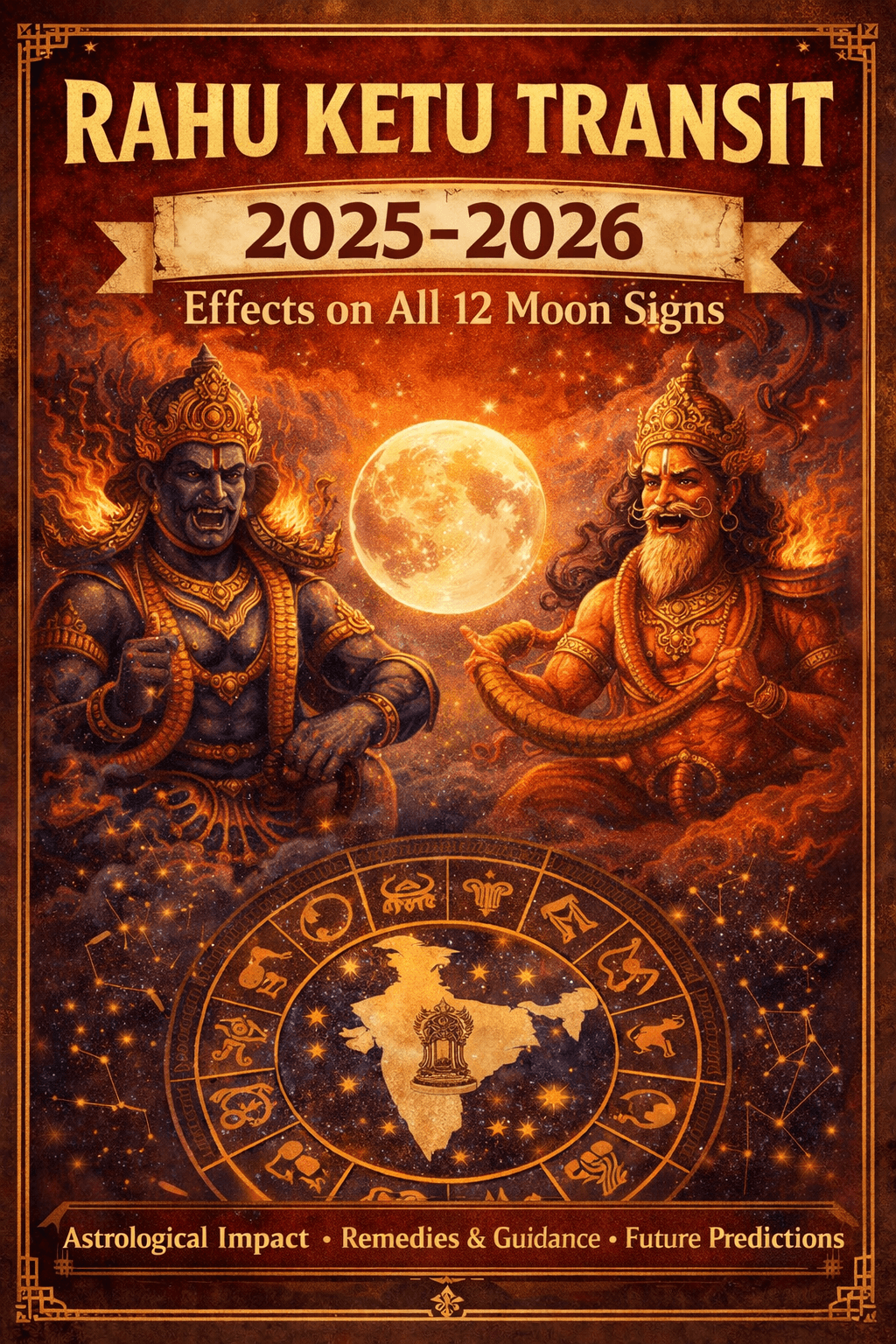
As we approach the late monsoon of 2026, the skies are preparing for a powerful celestial event that carries deep significance in Jyotish. On August 28, 2026, a total lunar eclipse (poorna chandra grahan) will cast its shadow across the Moon, and astrologically, it falls within the lunar mansion of Shatabhisha nakshatra in Kumbha rashi (Aquarius). This is not a common alignment. When Chandra Grahan occurs in Shatabhisha, the energies of Varuna devata and the hundred physicians (shata bhishaj) are activated in ways that demand attention to both physical health and emotional equilibrium. If your birth chart features prominent Moon placements, or if you are running Chandra dasha, this eclipse deserves a careful, calm look rather than fear.
Panchang and Astronomical Details of the August 28 Lunar Eclipse 2026
This chandra grahan aligns with Bhadrapada Purnima, the full moon tithi that marks the peak of the monsoon season. The Moon will be positioned in Kumbha rashi (Aquarius), specifically within the nakshatra of Shatabhisha, spanning the padas that fall between 6°40' and 20°00' of Aquarius. The eclipse's occurrence in a nakshatra governed by Varuna, the deity of cosmic waters and universal law, amplifies themes of purification, healing, and karmic cleansing. From a panchang perspective, this is also a time when the surya chandra samyoga (conjunction of Sun and Moon with Rahu/Ketu axis) creates the classic grahan yoga described in Brihat Parashara Hora Shastra (BPHS).
| Panchang Element | August 28, 2026 Details |
|---|---|
| Tithi | Bhadrapada Purnima (Full Moon) |
| Paksha | Shukla Paksha |
| Nakshatra | Shatabhisha (6°40' - 20°00' Kumbha) |
| Rashi | Kumbha (Aquarius) |
| Devata | Varuna (Cosmic Waters) |
| Varga | Chara (Movable) sign, Sthira (Fixed) nakshatra |
Shatabhisha Nakshatra and Varuna Devata Significance in Chandra Grahan
Shatabhisha, often called the "hundred physicians" or shata bhishaj, is the 24th nakshatra in the Vedic lunar zodiac. Its symbol, an empty circle or a charm, represents both wholeness and the void—a reminder that healing often requires us to sit with emptiness before restoration begins. The ruling deity is Varuna, the Vedic god of the celestial ocean, rain, and cosmic order. When a lunar eclipse occurs here, the Moon's nurturing light is temporarily veiled, and Varuna's domain over waters—both external and internal—comes under stress.
In classical texts like the Brihat Parashara Hora Shastra (BPHS), eclipses in nakshatras related to water and healing are said to trigger collective cleansing. This can manifest as sudden clarity about hidden health issues, emotional revelations, or the surfacing of ancestral patterns (pitru karaka) linked to the Moon. Because Shatabhisha is also associated with alternative medicine, mysticism, and isolation, you may feel an unusual urge to withdraw from social noise during this period. This is the nakshatra's natural response: it asks us to retreat into the laboratory of the self.
The combination of Rahu or Ketu's shadow with Chandra in Shatabhisha can create what Jyotishis call chitta vritti—fluctuations of the mind-stuff. If your natal Moon occupies Shatabhisha, or if you have key planets in Kumbha rashi, this eclipse may act as a karmic checkpoint. It is not inherently negative, but it is intense. Think of it as a cosmic MRI: uncomfortable, revealing, but ultimately diagnostic.
Vedic Effects on Moon-Ruled Rashis and Ascendants
In Vedic astrology, the Moon rules Karka (Cancer) rashi and is exalted in Vrishabha (Taurus), while it finds debilitation in Vrishchika (Scorpio). During any chandra grahan, these signs feel the tremors most directly, but the August 28 alignment in Kumbha creates a sama-shad-ashtaka (6-8) relationship with Cancer and a trinal tension with Scorpio. Let us look at how this may unfold.
Karka (Cancer) Rashi / Ascendant: For you, the Moon is the lagna lord (ascendant ruler). A grahan here can temporarily dim your emotional resilience. You might feel unusually nostalgic, fatigued, or hypersensitive to the moods of others. This is a good time to practice mauna (silence) and avoid major decisions regarding home or mother.
Vrishabha (Taurus) Rashi / Ascendant: With the Moon exalted in your sign's second house from the eclipse point, financial and familial matters may come under review. The eclipse in the tenth house from Taurus can bring professional realizations. Do not panic if a project stalls; the energy will reopen after the grahan period.
Vrishchika (Scorpio) Rashi / Ascendant: The Moon is debilitated in your sign, and the eclipse falls in your fourth house. Emotional undercurrents related to property, vehicles, or maternal lineage may surface. This is classic chaturtha grahana phala described in Phaladeepika. Avoid arguments with family members and postpone property deals if possible.
Kumbha (Aquarius) Rashi / Ascendant: The grahan occurs in your first house or moon sign. This is a direct hit. You may feel a profound shift in identity or physical vitality. Headaches, eye strain, or sleep disturbances are common physical indicators. Prioritize hydration and avoid new initiations.
💡 Quick Tip: If you do not know your Moon sign or Ascendant, use our free kundali tool to check whether Shatabhisha nakshatra holds any planets in your natal chart. Eclipse effects are always personalized.
Grahan Dosha and Health/Emotional Risks During the Eclipse
Grahan dosha is not a punishment; it is a temporary turbulence in the cosmic signal. During the August 28 lunar eclipse, the Moon's reflected light is interrupted by Earth's shadow, symbolically breaking the soma (divine nectar) flow to the psyche. In Ayurvedic terms, this aggravates vata and pitta doshas, leading to anxiety, acidity, insomnia, and erratic digestion.
Specifically, because this eclipse falls in Shatabhisha—a nakshatra linked to the circulatory system, lymphatic drainage, and the nervous system—health risks tend to cluster around these areas. You may notice heightened blood pressure, water retention, or strange dreams. Emotionally, the Varuna energy can dredge up repressed grief or unresolved guilt. This is one of those placements that makes people nervous on Reddit threads, but the classical approach is gentler: observe, fast, and chant.
- Pregnant women should avoid exposure to the eclipse rays and refrain from cutting or sewing during the grahan kaal.
- Those with chronic anxiety or depression should maintain their medication and therapy routines strictly; the eclipse can act as a trigger, not a cause.
- Digestive fire (jatharagni) is believed to weaken during the eclipse window, so avoid heavy meals and non-vegetarian food 12 hours before and after.
- Children and elderly family members may experience disrupted sleep; create a calm, sattvic environment with minimal screen time.
Complete Grahan Dosha Nivaran Remedy Protocol
Vedic texts prescribe a clear three-phase approach to grahan dosha nivaran: purva karma (pre-eclipse), grahana karma (during eclipse), and paschat karma (post-eclipse). Here is a practical, step-by-step protocol tailored for the August 28 Shatabhisha chandra grahan.
Pre-Eclipse Preparation (Snan, Daan, and Mantra)
Begin the day with a purifying bath before sunrise if possible. Add a pinch of turmeric or neem leaves to the water. Wear white or light blue clothing, colors associated with Chandra and Varuna respectively. Prepare your puja space with a silver vessel filled with water, white flowers (jasmine or chameli), and uncooked rice.
Chant the Maha Mrityunjaya Mantra eleven times for general protection:
Om Tryambakam Yajamahe Sugandhim Pushtivardhanam
Urvarukamiva Bandhanan Mrityor Mukshiya Maamritat
Follow this with the Chandra Grahan Mantra:
Om Som Somaya Namah — chant 108 times on a chandra mala (moonstone or pearl rosary).
During the Eclipse: What to Do
Do not look at the eclipse directly. Sit in your puja room or a clean corner facing west or north. Keep a diya (ghee lamp) burning. Recite the Shatabhisha Nakshatra Mantra dedicated to Varuna:
Om Lam Varunaya Namah
Engage in daan (charity) mentally by pledging support to a medical facility or water conservation cause. If you have a Shatabhisha natal Moon, place a small amount of kusha grass in your water vessel.
Post-Eclipse Puja Vidhi and Daan
After the eclipse ends, take a head bath before touching any deity or kitchen item. Cook fresh food; do not consume anything prepared during the grahan kaal. Perform shuddhi (purification) of your home by sprinkling gomutra (cow urine) or holy water (Ganga jal) mixed with rock salt in all corners.
Offer annadan (food donation) or vastra dan (clothing donation) to elderly women or brahmanas on the next day. The classical texts emphasize that daan given after a grahan in Shatabhisha multiplies its merit, especially if it relates to health care or water.
| Remedy | Item/Mantra | Best For |
|---|---|---|
| Mantra Japa | Om Som Somaya Namah (108x) | Emotional stability, mental peace |
| Gemstone Support | Pearl (Moti) or Moonstone | Strengthening Chandra in natal chart |
| Charity (Daan) | White cloth, rice, sugar, milk to needy | Grahan dosha nivaran |
| Fasting | Phalahar or complete fast during eclipse | Physical and spiritual purification |
| Post-Eclipse Snan | Turmeric-neem water bath | Removing negative subtle energies |
💡 Quick Tip: If you are observing a fast, avoid onion, garlic, and grains during the eclipse window. Fasting on Purnima itself is also beneficial for hormonal balance and manah shanti (mental peace), as noted in Jataka Parijata.
For those with a prominent Gaja-Kesari Yoga or other lunar yogas in their chart, this eclipse can act as a reset button rather than a curse. Similarly, if you have been dealing with ancestral karma or Pitru Dosha, the Varuna energy of Shatabhisha supports deep release through tarpan and daan.
Post-Eclipse Sutak and Lifestyle Adjustments
The sutak (inauspicious period) associated with a lunar eclipse generally extends for nine hours before the eclipse begins and ends after the pariskarana (purification bath). In the days following the August 28 event, maintain a sattvic diet and avoid alcohol and excessive stimulants. The Moon will take approximately 14 days to fully regain its strength in the panchang, though the acute effects last about three days.
This is an excellent time to begin a japa sadhana or to restart a health regimen. The shuddhi energy of Shatabhisha supports detoxification. You might find that practices like pranayama, yoga nidra, and journaling yield unusual clarity during this fortnight. If you are planning any vrat or puja vidhi in the coming months, use the momentum of this eclipse to set a sankalpa (intention).
🔮 Check Your Personal Eclipse Impact
Want to know exactly how the August 28 lunar eclipse in Shatabhisha will affect your Moon sign, Ascendant, and natal planets? Generate your detailed Vedic kundali on RashiByte and get personalized grahan dosha analysis.
Generate Free Kundali →Or ask our AI astrologer for personalized guidance on remedies and timing.
The August 28, 2026 lunar eclipse in Shatabhisha nakshatra is a powerful moment in the Vedic calendar, but power does not always mean danger. It means transformation. By observing the traditional protocols of fasting, mantra, and daan, you align yourself with the natural rhythm of the cosmos rather than fighting it. Let the shadow of the Earth remind you that even the Moon returns to full brilliance—and so do you. Shubh grahan anushthan.
— Written by RashibyteAI
No comments yet. Be the first to share your thoughts!