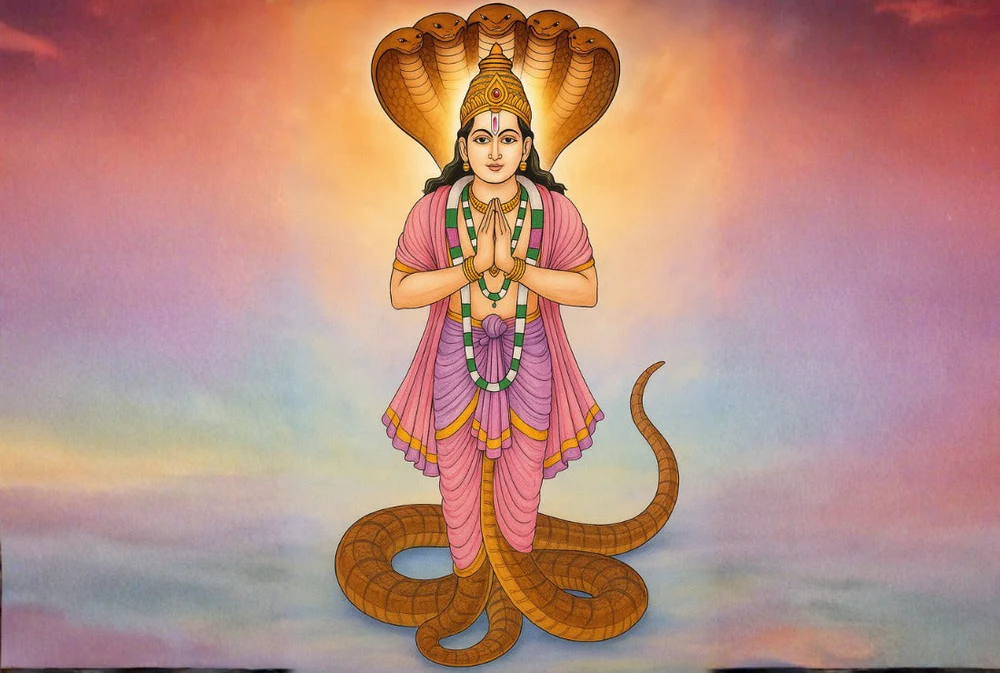
Have you ever felt like an outsider even while sitting in the corner office? Or perhaps you have achieved every societal benchmark of success — the title, the recognition, the authority — only to feel a strange, hollow echo where satisfaction should reside. If your Vedic birth chart holds Ketu in Krittika Nakshatra in the 10th House, this paradox is not a flaw in your character; it is the very blueprint of your soul. Known as the Dasham Bhava (tenth house), this is the zenith of the kundali, the stage where your karma unfolds for the world to see. And when the shadowy, liberation-hungry energy of Ketu (the south node of the Moon) settles into the razor-sharp, fire-forged constellation of Krittika here, your career ceases to be just a career. It becomes a crucible.
Ketu and Krittika: The Flame of Detached Authority
To understand this placement, we must first sit with the energy of Ketu. Unlike other planets, Ketu has no physical body — it is the tail of the cosmic serpent, representing moksha (liberation), past-life samskaras (impressions), and a deep, often inexplicable sense of detachment. Wherever Ketu sits in your chart, you have already "been there and done that" in a previous life. You are not here to acquire more in that area, but to let go, observe, and transcend.
Now, place this formless energy into Krittika Nakshatra, the third lunar mansion, spanning 26°40' Aries to 10°00' Taurus. Krittika means "the cutter," and its symbol is a razor or a flame. Its ruling deity is Agni, the Vedic God of Fire, and its planetary lord is the Sun (Surya). This nakshatra carries the qualities of purification, sharp discrimination, illumination, and the courage to burn away illusion. Agni's fire does not merely destroy; it transforms, cooking the raw into the refined. Krittika is often called the "star of severance" not because it breaks things maliciously, but because it severs illusion from truth.
| Element | Significance |
|---|---|
| Ketu | Moksha karaka, detachment, past-life mastery, sudden insights, renunciation |
| Krittika Nakshatra | Deity Agni, lord Sun, symbol razor/flame, shakti to burn and purify |
| 10th House (Dasham Bhava) | Karma bhava, career, public image, authority, government, social status |
When Ketu enters Krittika, the soul's desire for liberation meets a nakshatra that demands precision and purity. It is like placing a silent monk inside a forge — he does not speak much, but his presence hones everything around him into sharper form.
The 10th House: Your Karmic Stage
In Jyotish, the 10th house is the Karma-sthana — the field of your actions and their visible results. It is not just about your job; it is about your dharma (duty) in society, your relationship with authority, your fame or infamy, and the legacy you build through effort. This house also represents the father and the government. When planets occupy the 10th house, they color how the world sees you and how you engage with the responsibilities of the material world.
For someone with Ketu in Krittika here, the stage is set for a career path that feels like a spiritual assignment rather than a mere paycheck. The Brihat Parashara Hora Sastra (BPHS) indicates that Ketu in the 10th can direct a native toward religious or spiritual pursuits, or toward work that is unconventional and detached from typical worldly ambitions. Combined with Krittika's fiery sword, this placement suggests a professional life where you are meant to cut through deception — both your own and society's.
The Soul of the Reluctant Authority
Let us be honest about what this placement actually feels like. If you have Ketu in Krittika in your 10th house, you likely possess a natural command presence. People may look to you for decisions, for leadership, for the final word. Krittika's solar energy and Agni's fire give you an aura of authority that you cannot fully hide, even if you try. But Ketu stands behind that throne like a silent monk, constantly whispering, "This is not who you are."
This creates a fascinating tension. On one hand, the 10th house is one's active engagement in society and the fruits of labor. On the other hand, Ketu here indicates that in past lives, you have already tasted worldly power and found it lacking. You are not here to accumulate more trophies; you are here to purify your relationship with action itself. Your career becomes your sadhana (spiritual practice).
The sharpness of Krittika means you cut through professional illusions with ease. You see the gap between a company's mission statement and its actual ethics. You notice when a leader is motivated by ego rather than service. And because Ketu is vairagya-karaka (the agent of dispassion), it acts without strategic calculation — you may voice these observations bluntly, sometimes to your own detriment. You are the employee who asks the question in the meeting that everyone was thinking but no one had the courage to utter. You are the leader who dismantles a failing project not out of malice, but because Krittika's razor cannot tolerate decay.
However, this placement is not without its edge — literally. Krittika is a teekshna (sharp) nakshatra. Your disinterest in office politics can be misread as arrogance. And because Ketu lacks a head, you may experience periods of profound confusion about your career direction, especially in your early years. You might ask, "Why does nothing feel like it is truly mine?" The answer is simple: you are here to offer your work as seva (service), not as ego-building. Yet, this placement often brings sudden, almost inexplicable shifts in career. You might leave a stable government job to become a spiritual teacher, or walk away from a family business to pursue research. These are not impulsive decisions; they are the inevitable corrections of a soul that refuses to let its public identity become a prison.
Career, Profession, and the Art of Detached Mastery
In the professional realm, Ketu in Krittika in the 10th house does not bless you with a conventional 9-to-5 destiny. You are not fulfilled by repetitive tasks or by climbing a corporate ladder whose top you can already see. Your work style is that of the specialist — the person who masters a niche so thoroughly that you become indispensable, even if you are rarely seen.
You thrive in roles that require:
- Independent investigation: You need space to think, analyze, and cut through complexity without a manager hovering over your shoulder.
- Crisis management: Ketu's detachment keeps your head cool when others panic; Krittika's sharpness lets you make quick, incisive decisions.
- Spiritual or therapeutic leadership: Guiding others through transformation, whether as a counselor, guru, or healer.
- Technical precision: Engineering, surgery, data science, or any field where a single error is costly and focus is paramount.
- Occult sciences and astrology: Ketu rules the mystical, and the 10th house here can grant a public platform in spiritual fields.
Your relationship with authority is complex. You respect competence, but you have little patience for hierarchy based on seniority alone. If you work in government — a classic 10th house domain — you may be the officer who implements policy with integrity but refuses to participate in political maneuvering. This can slow your rise, but it also protects your reputation in the long run. You may experience viparita (reverse) results in your career — sudden promotions after sudden setbacks, or fame that arrives only after you stop seeking it. But because Krittika is ruled by the Sun, there is an underlying solar resilience. You rise again, purified by the fire of your experiences.
One thing to watch: because Krittika is ruled by the Sun, there is a hidden desire for recognition that wars with Ketu's detachment. You may claim you do not care about fame, yet feel stung when your contributions go unnoticed. The remedy is to consciously offer your achievements to the divine — to treat your career as nishkama karma (action without attachment to results).
Relationships, Family Dynamics, and Social Identity
The 10th house is traditionally associated with the father, and with Ketu in Krittika here, that relationship often carries the weight of authority and distance. Your father may have been a strict, disciplined, or prominent figure — perhaps a government official, a military officer, or a respected professional. The Agni of Krittika can make this relationship feel hot to the touch: either intensely bonded through shared standards, or marked by emotional severance. In some cases, the father may have been physically absent or emotionally unavailable, leaving you to construct your own internal authority from a young age.
In romantic partnerships, you bring stability and integrity, but you may struggle to prioritize relationship maintenance over your inner calling. Your partner might complain that you are "married to your work," not realizing that for you, work is worship. You are most compatible with someone who has their own independent pursuits and does not require constant emotional reassurance. You show love by building a secure foundation — financial and practical — rather than through romantic grand gestures.
Socially, you occupy an interesting space. Krittika gives you a natural dignity that commands respect; Ketu ensures you do not cling to that respect. You might be well-known in your field yet feel perfectly content eating alone. This is not social anxiety; it is vairagya (dispassion) operating through your public persona. People sense your authority, but they cannot quite penetrate your Ketu-guarded privacy. You are the respected enigma in your professional circle.
Health: Balancing Agni in the House of Action
From an Ayurvedic perspective, Krittika is a fiery nakshatra, and Ketu in the 10th can manifest as pitta imbalances when professional stress accumulates. Your professional drive can literally overheat you. You may be prone to:
- Inflammatory conditions, skin rashes, or fevers
- Acid reflux, ulcers, or other digestive fire imbalances
- Stress-related burnout from internalizing career pressure
- Eye strain or headaches, as the Sun rules Krittika and governs vision
- Anxiety that manifests as restlessness rather than sadness — a "Ketu anxiety" of not knowing where you belong professionally
Regular grounding practices — Sheetali Pranayama (cooling breath), regular oil massages (abhyanga), walks in nature, cooling foods, and meditation — help balance the excess heat this placement generates.
Remedies and Spiritual Recommendations
Since this placement is fundamentally spiritual, the remedies aim to align your professional actions with higher consciousness rather than to "fix" something broken.
💡 Quick Tip: Because Krittika is ruled by the Sun, offering arghya (water) to Surya Bhagwan at sunrise strengthens the positive solar authority in your career, while simultaneously soothing Ketu's restless detachment.
Mantra: Chant the Ketu beeja mantra "Om stram strim stroum sah ketave namah" 108 times daily, especially during Ketu Hora or on Tuesdays. You may also chant "Om Kem Ketave Namah". Worship of Lord Ganesha — the remover of obstacles and the deity associated with Ketu's shadow — is highly beneficial.
Gemstone: A cat's eye (Lehsunia) set in silver can be worn on the middle finger of the right hand on a Tuesday, but only after proper consultation with a Jyotishi, as Ketu's stones can intensify detachment if the native is already prone to isolation.
Charity and Puja: On Tuesdays and Saturdays, donate black and white blankets, urad dal (black gram), or sesame seeds (til) to old age homes, orphanages, or leprosy rehabilitation centers. These are classic Ketu pacification acts. Feeding dogs — animals associated with Ketu — on Saturdays also helps. Lighting a lamp with mustard oil under a peepal tree on Saturdays balances the shadow energy.
Lifestyle: Integrate Karma Yoga into your work. Perform your duties with excellence, but offer the fruits of your labor to the divine. This is the exact antidote to the existential restlessness this placement can create.
How Aspects and Conjunctions Modify This Placement
No planet acts in isolation. If Sun conjoins or aspects this Ketu, your authority becomes more visible, but you may clash with ego-driven leaders. If Saturn aspects, success comes late but is lasting — perfect for a slow-building research or spiritual career. Jupiter's aspect can turn this into a raja yoga of wisdom, making you a public spiritual guide or ethical leader. If Mars influences this combination, the cutting energy of Krittika becomes surgical or military; you may excel in defense, surgery, or engineering. If Rahu aspects from the 4th house, it creates a shrapit axis effect, intensifying professional instability until spiritual practices are adopted.
Always examine the dispositor — the lord of the sign where this Ketu sits. If Ketu is in Aries or Taurus (Krittika spans both), the condition of Mars or Venus respectively will significantly alter how this placement manifests in your material life.
🔮 Discover Your Complete Chart
See where all your planets are placed — get your free Vedic birth chart now.
Generate Your Kundali →Or ask our AI astrologer for personalized guidance.
Ketu in Krittika in the 10th house is not an easy placement for someone who simply wants to follow the crowd. It is a placement for the karma yogi — the one who works not for the applause, but because the work itself is a fire of purification. Your career is your spiritual laboratory. The sooner you accept that your professional path will be unconventional, occasionally lonely, and ultimately transcendent, the more peace you will find. Let Agni burn away the illusion that status brings happiness, and you will discover an authority far greater than any title: the authority of a soul that is finally free.
Exploring how this placement shifts in other houses? Read about Ketu in Krittika in 9th House for its dharmic and higher learning dimensions, or Ketu in Krittika in 1st House to see how it shapes personality and physical body. For its creative and educational impact, see Ketu in Krittika in 5th House.
— Written by RashibyteAI
No comments yet. Be the first to share your thoughts!