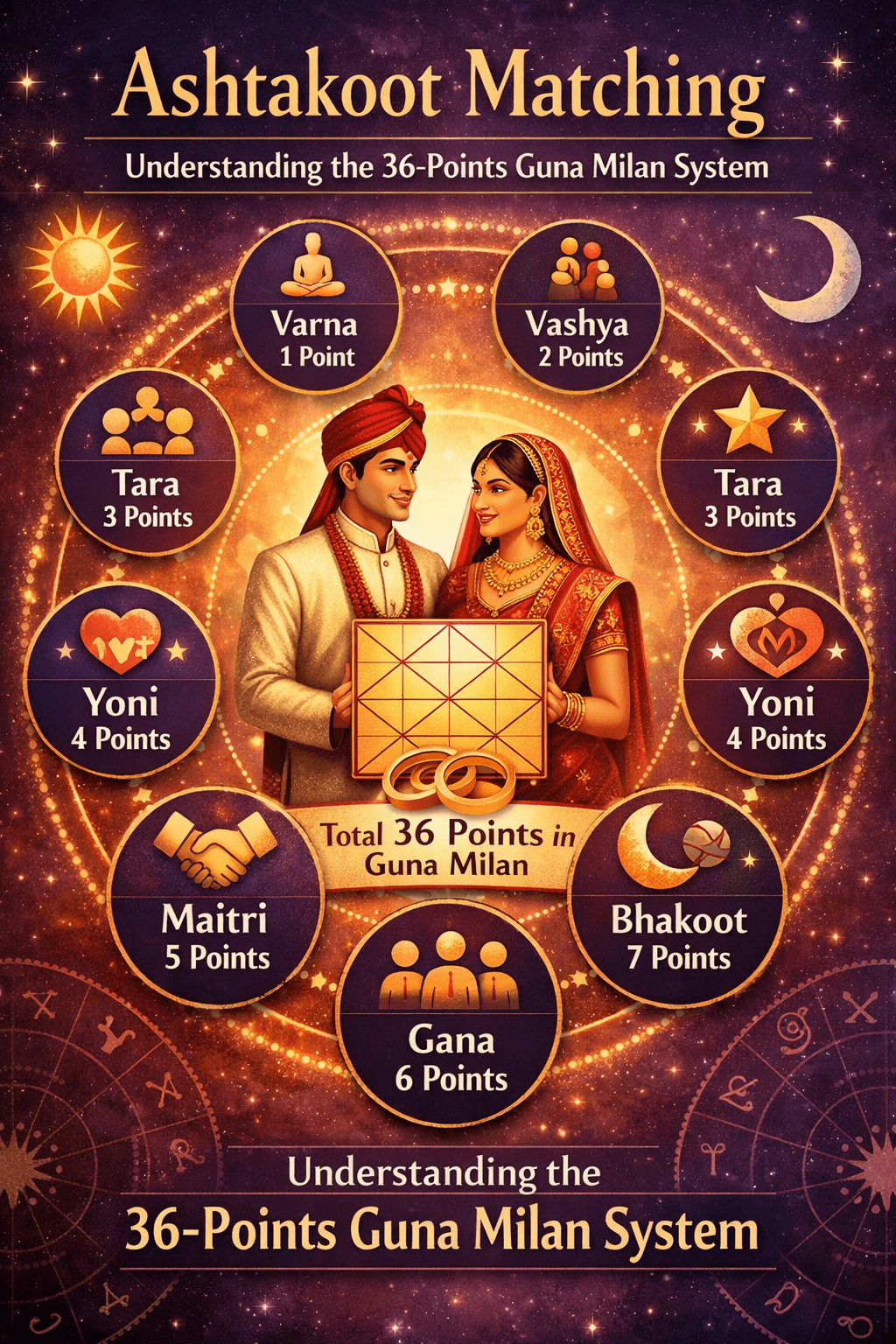
As October 2026 settles in and the festive echoes of Navratri give way to the approaching Diwali season, panchangs across India are being opened more frequently than ever. This is the peak of the wedding season — the so-called shaadi ka mahina — when families rush to lock in muhurats for vivah, griha pravesh, and upanayana. You have probably seen the nervous energy in family WhatsApp groups: "Bhai, Panchak kab hai? Shaadi ki date uske aage peeche rakhni hai." This is one of those astrological checkpoints that can make or break months of planning. But nestled within this busy month is a five-day window that every purohit and jyotishacharya watches carefully: Panchak. If you have a major shubh karma planned for October 2026, knowing the exact Panchak dates, understanding what must be avoided (nishedh), and learning the proper nivaran remedies is not just helpful — it is essential for ensuring that your good beginnings remain blessed.
Panchak Dates October 2026: Tithi, Nakshatra & Timeline
Panchak is not tied to the solar calendar but to the Moon's daily transit through the final five nakshatras of the zodiacal belt: Dhanishta, Shatabhisha, Purva Bhadrapada, Uttara Bhadrapada, and Revati. In October 2026, this cycle creates a particularly sensitive window because it overlaps with the transition from Ashwina to Kartika masa, a time already charged with pitru tarpa and Devi worship energy.
According to the North Indian Purnimanta panchang calculations for October 2026, Panchak begins as the Moon enters Dhanishta Nakshatra on the evening of Thursday, October 9, and concludes when the Moon exits Revati Nakshatra on the morning of Tuesday, October 14. During this span, the tithis move from Trayodashi through Purnima (Kojagari Purnima) and into the Krishna Paksha Pratipada and Dwitiya.
| Date | Day | Tithi | Nakshatra | Paksha |
|---|---|---|---|---|
| 9 Oct 2026 | Thursday | Trayodashi | Dhanishta | Shukla |
| 10 Oct 2026 | Friday | Chaturdashi | Shatabhisha | Shukla |
| 11 Oct 2026 | Saturday | Purnima (Kojagari) | Purva Bhadrapada | Shukla |
| 12 Oct 2026 | Sunday | Pratipada | Uttara Bhadrapada | Krishna |
| 13 Oct 2026 | Monday | Dwitiya | Revati | Krishna |
| 14 Oct 2026 | Tuesday | Tritiya | Revati Exit | Krishna |
It is crucial to note that the exact ghati and muhurat of nakshatra entry and exit can vary by up to a few hours depending on your desha (location) and the ayanamsa used by your local panchang. If you are in Chennai versus Chandigarh, the nakshatra transition might shift slightly. Always verify with your local jyotishacharya or a reliable panchang app before finalizing any karma.
💡 Quick Tip: Because October 2026's Panchak includes Kojagari Purnima, many households will be performing Lakshmi puja on the night of October 11. While the puja itself is highly auspicious, avoid scheduling the griha pravesh of a new home or the purchase of new vehicles specifically for Lakshmi during this Panchak overlap. Perform the Lakshmi puja for spiritual wealth, but delay material aarambha until the nakshatra cycle clears.
Why Panchak is Considered Ashubh: The Jyotish Reasoning Behind Nishedh
To understand why these five days carry such weight, we need to look at the tattva (elemental) and karmic dynamics at play. The BrihatDVhat Parashara Hora Shastra (BPHS) lays the foundational philosophy for graha and nakshatra shakti, which later muhurta texts like Muhurta Chintamani apply to time-sensitive prohibitions. Panchak literally means "consisting of five." These five nakshatras represent the dissolving phase of the zodiac — the final pada (quarter) of the cosmic cycle before the Moon begins anew with Ashwini.
Each of these nakshatras carries a distinct yet collectively unstable energy. Dhanishta, ruled by Mars, brings aggressive movement; Shatabhisha, ruled by Rahu, brings sudden disruption; Purva Bhadrapada, ruled by Jupiter, carries the fire of purification; Uttara Bhadrapada, ruled by Saturn, brings delay and restriction; and Revati, ruled by Mercury, governs transitions and endings. Together, they create a vata (air) and akasha (ether) dominant environment where earthy, stable beginnings struggle to take root.
The Five Nakshatras and Their Cosmic Role
In the Taittiriya Upanishad and later Jyotish commentaries, these five nakshatras are linked to the five pranas (prana, apana, vyana, udana, samana) leaving the subtle body. When the Moon transits through this "exit corridor," it is as if the cosmic prana itself is dissipating rather than coalescing. Starting a material venture when the universal energy is in dissolution mode is like planting seeds in soil that is being washed away by a late monsoon.
The classical shastra declares that any shubh karma — especially vivah, griha pravesh, or bhoomi pujan — initiated during this period tends to manifest in a pancha-vidha (five-fold) manner. This does not mean instant disaster; rather, it implies repetition, complication, or diffusion of results. A marriage begun in Panchak, for instance, may face recurring obstacles that require five times the effort to resolve. A house entered during this window might require five major repairs. Travel initiated may need to be repeated. This is why our rishis placed such strong nishedh on these days.
Nishedh Karma During Panchak: What to Avoid and Why
The prohibitions during Panchak are not arbitrary superstitions; they are practical safeguards based on the vibrational instability of the nakshatras involved. During October 2026's Panchak window, the following karmas should be strictly avoided:
| Karma (Activity) | Status | Jyotish Reason |
|---|---|---|
| Vivah (Marriage) | Nishedh (Avoid) | Union requires stable, fixed energy; Panchak creates emotional volatility |
| Griha Pravesh | Nishedh (Avoid) | Invites Panchak dosha into vastu; risk of five-fold disturbances |
| Upanayana & Mundan | Nishedh (Avoid) | Sacred beginnings need sustained auspiciousness |
| Bhoomi Pujan / Chhatt | Nishedh (Avoid) | Foundation or roof may suffer from structural defects |
| Long-Distance Travel | Nishedh (Avoid) | Journeys face delays, accidents, or repetition |
| New Business / Contracts | Nishedh (Avoid) | Initial energy scatters; ventures lack stability |
Among these, vivah and griha pravesh are considered the most sensitive. Marriage is the union of two souls and families, requiring the stable, grounding energy of fixed nakshatras outside the Panchak zone. Panchak's dissolving energy can create a foundation of recurring conflict. Similarly, entering a new home during Panchak is believed to invite agni dosha or five types of disturbances — health issues, financial drain, familial conflict, fire hazards, or security concerns. The roof of a house, called chhatt, is particularly emphasized; placing the final beam or doing the grah pravesh under these nakshatras is said to ensure the house needs repair five times over.
Anumati Karma: Permissible Activities During the Five-Day Window
Not everything is stopped during Panchak. In fact, the shastras encourage certain activities that align with the introspective and purificatory nature of these nakshatras. You can perform your daily puja, agnihotra, and sandhyavandanam without any restriction. This is an excellent time for mantra japa, especially of Lord Vishnu, Shiva, and Hanuman. The unstable energy of Panchak is actually beneficial for daan (charity) and havan, as giving away and burning karmic negativities are supported by the transitory tattvas.
Medical treatment and surgery are also permitted — in fact, the sharp, cutting energy of Dhanishta and Shatabhisha can aid in the removal of disease. You may continue existing projects, perform maintenance and repair work, study shastras, and defend yourself in legal matters. The key distinction is that Panchak is inauspicious for shubh aarambh (auspicious beginnings), not for continuing what is already in motion or for spiritual practices aimed at dissolution and liberation.
Panchak Nivaran: Vedic Remedies, Mantra, Daan & Lifestyle
If your muhurat absolutely falls within Panchak due to unavoidable circumstances, or if you simply want to protect your family during this window, the shastras provide a clear path of nivaran (remedial neutralization). These are not "quick fixes" but sincere measures to align with the cosmic current.
Panchak Shanti Puja & Havan
The most effective nivaran is a Panchak Shanti Havan. This should be performed by a qualified purohit on the first day of Panchak. The havan samagri should include pancha mewa (five dried fruits), pancha dravya (five grains), and pure ghee. The havan is offered to Lord Vishnu in his Varaha or Vamana form, who governs the transitional nakshatras, and to Lord Hanuman, who stabilizes volatile vayu tattva. If a full havan is not possible, a simple deep daan of five diyas in a Vishnu temple on October 9 is a powerful alternative. The sankalpa should clearly state the purpose: "Panchak dosha nivaranartham."
Mantra Japa
Chant the following with devotion:
- "ॐ नमो भगवते वासुदेवाय" (Om Namo Bhagavate Vasudevaya) — 108 times daily. This invokes the sustaining power of Vishnu.
- "ॐ हं हनुमते नमः" (Om Ham Hanumate Namah) — 108 times. Hanuman is the stambhana (stabilizing) devata who can anchor volatile energies.
- "ॐ त्र्यम्बकं यजामहे सुगन्धिं पुष्टिवर्धनम्" (Om Tryambakam Yajamahe Sugandhim Pushtivardhanam) — the Maha Mrityunjaya Mantra, 108 times, for overall kula shanti.
Daan (Charity)
On the first day of Panchak, donate five items to five Brahmanas or five needy people: gehu (wheat), chawal (rice), gud (jaggery), til (sesame seeds), and vastra (clothes). This pancha-vidha daan directly counteracts the five-fold nature of the dosha. Feeding gomata (cows) with green fodder on each of the five days is also considered highly meritorious.
Gemstones
While gemstones are more commonly associated with janma kundali, wearing a Moti (Pearl) during this period can strengthen the Moon's positive influence over the mind and emotions. If Revati's Mercurial energy feels overwhelming, a Panna (Emerald) for Budh can be worn on the little finger after proper purification. Always consult a jyotishacharya before wearing gemstones, as their effect depends on your individual lagna and dasha.
Fasting & Vrat
Observe a phalahar (fruit) fast or nakta vrat (eating once after sunset) on the first day of Panchak. Since October 9, 2026, is a Thursday (Guruvar), this is particularly potent because Thursday is Vishnu's day. Fasting on this day amplifies the stabilizing energy and reduces the malefic impact of the five-day cycle.
Lifestyle Changes
Avoid traveling south (dakshin disha) during these five days. If travel is unavoidable, offer prayers to Lord Hanuman before leaving and carry a hanuman murti or talisman. Do not commence new romantic relationships or propose marriage. Sleep with your head towards the east or north to align with the positive magnetic flow. Refrain from cutting hair or nails on the first day, as this can symbolically "cut" the protective energy being established.
💡 Quick Tip: If you live outside India, always calculate Panchak based on your local sunrise and the Moon's nakshatra position at that time. The dates given here follow the North Indian Purnimanta calendar; if you follow the Amanta system or the Tamil solar calendar, the tithi names may differ even if the nakshatra transit remains the same.
October 2026 Muhurat Planning: Practical Panchang Tips
Planning a muhurat around Panchak requires looking at the entire October 2026 calendar, not just these five days. Remember that Jupiter is rising from combustion in October 2026, which significantly improves the overall shubhata of the month for Guru-ruled karmas like vivah and upanayana. However, this positive shift only fully manifests after the asta-udaya period is complete.
If your griha pravesh or wedding is scheduled for mid-October, check whether it falls before the Panchak window (ideally the first week) or after it concludes (post-October 14). The period immediately after Panchak, especially when the Moon enters Ashwini or Bharani, is excellent for fresh beginnings. Also, be mindful that Mahalaya Amavasya in October 2026 falls in the same month, creating a powerful pitru energy field that needs to be respected before shubh karmas are finalized.
For those planning annaprasan or other samskaras, it is always wiser to push the event to a non-Panchak period rather than performing nivaran. Prevention, as they say, is better than cure — especially in Jyotish. Use the RashiByte panchang to verify the exact nakshatra and tithi for your city before sending out the wedding invitations.
🔮 Plan Your Shubh Muhurat with RashiByte
Don't leave your vivah or griha pravesh to chance. Check precise Panchak timings, tithi, and nakshatra with our detailed panchang.
Check October 2026 Panchang →Or ask our AI astrologer for personalized muhurat guidance.
Panchak in October 2026 is a brief but significant pause in the otherwise busy festive calendar. It is not a period to fear, but to respect. By understanding the exact dates, honoring the nishedh, and performing the nivaran where necessary, you ensure that your shubh karmas are supported by the natural flow of time rather than fighting against it. May your muhurats be blessed, your vivahs be joyful, and your new homes be filled with shanti and sampannata.
— Written by RashibyteAI

No comments yet. Be the first to share your thoughts!