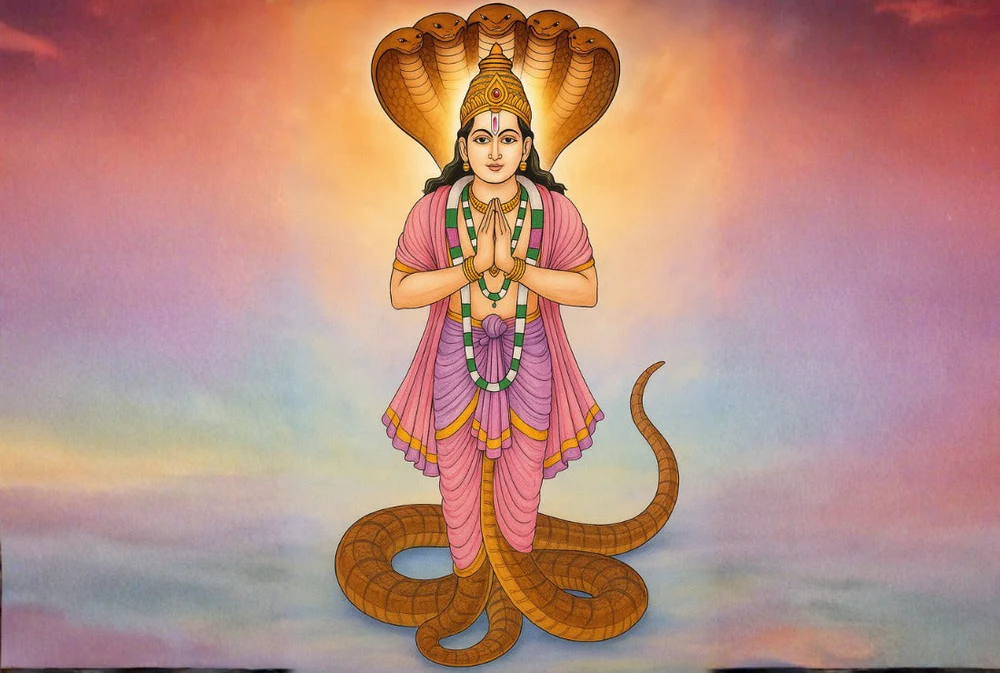
When Ketu — the shadowy node of detachment and spiritual liberation — settles into the razor-sharp nakshatra of Krittika in the 12th house, the soul's journey takes a decisive turn toward moksha. This is not a loud placement; it is the quiet flame of Agni (the fire god) burning away the final attachments that tie you to the material world. If your birth chart holds this combination, you may have always felt like an old soul standing at the edge of two worlds — deeply aware that something beyond the visible is calling you home.
Understanding Ketu and Krittika: The Flame and the Shadow
Ketu is not a planet in the traditional sense; it is a chhaya graha (shadow planet) that represents the tail of the celestial serpent. In Jyotish, Ketu governs moksha (final liberation), vairagya (dispassion), sudden events, psychic sensitivity, and the accumulated samskaras (impressions) from past lives. Where Rahu chases material experience, Ketu already has the wisdom — and often the weariness — of having been there before. Ketu's energy is inward, renunciative, and brilliantly intuitive, but it can also manifest as confusion, escapism, or a sense of not quite fitting into the world.
Krittika Nakshatra, often called The Cutter, carries the energy of a sharp, flaming blade. Its deity is Agni, the Vedic god of fire, and its ruling planet is the Sun (Surya). Agni is the divine purifier; he transforms whatever he touches. The symbol of Krittika is a razor or a flame, and its shakti (power) is Dahana Shakti — the power to burn and purify. This nakshatra has a nurturing yet severe quality; like fire that cooks food but also destroys, Krittika can protect by cutting away decay. It is associated with authority, criticism, sharp speech, and the ability to see flaws that others miss.
| Attribute | Details |
|---|---|
| Planet | Ketu (केतु) — South Node, Moksha Karaka |
| Nakshatra | Krittika (कृत्तिका) — The Cutter/Flame |
| Nakshatra Lord | Sun (Surya) — Soul, Authority, Ego |
| Deity | Agni — Fire God, Purifier |
| House | 12th House (Dwadash Bhava) — Loss, Liberation, Foreign Lands |
| Core Theme | Fiery Detachment Leading to Spiritual Liberation |
The 12th House: Gateway to the Beyond
In Vedic astrology, the 12th house is the dwadash bhava, the final house of the chart and the place where the individual dissolves into the collective. It governs vyaya (expenses and losses), foreign residence, isolation, bed pleasures, sleep, dreams, hospitals, and — most importantly — moksha or spiritual liberation. As Brihat Parashara Hora Sastra describes, the 12th house is the house of final expenditure, where all that we have accumulated in the previous eleven houses is ultimately surrendered.
But the 12th house is not merely about loss in a tragic sense; it is about release. It is the house of the hermit, the pilgrim, and the mystic. Planets here operate behind the scenes, away from public view, often bringing experiences that humble the ego and expand the soul. When a planet sits in the 12th house, its energy becomes subtle, hidden, and deeply transformative.
Ketu in Krittika in the 12th House: The Purifying Fire of Renunciation
When Ketu's dissolving energy meets Krittika's cutting fire in the house of ultimate surrender, the result is one of the most spiritually potent placements in a chart. This combination creates a native who is being burned clean of worldly desire — not always through gentle means, but through the necessary flame of Agni.
The 12th house is Ketu's natural domain. Ketu is the moksha karaka, and the 12th house is the moksha sthana. Having Ketu here is like placing a fish in water — it is the environment where Ketu functions most naturally. However, placed in Krittika, this moksha-oriented energy becomes sharp, decisive, and occasionally severe. You do not drift toward spirituality; you are cut away from materialism with the swift blade of Krittika.
Classical texts note that Ketu in the 12th house can grant a strong spiritual temperament, but in Krittika, there is an added dimension of tapas (austerity). You may experience sudden, sharp separations from home, family, or country that push you toward isolation. These are not punishments; they are Agni's way of clearing the path. The Sun's rulership over Krittika adds the element of ego-transcendence — the fire is burning away ahamkara (the sense of I) so that the soul can recognize its true nature.
If you have this placement, you might notice that material possessions feel unusually heavy to you. You may accumulate wealth only to see it slip away, not because you are unlucky, but because your soul is wired to travel light. Expenses often arise suddenly — perhaps for medical treatments, spiritual retreats, or unforeseen journeys — yet these expenditures ultimately serve your liberation. There is also a profound psychic sensitivity here. The 12th house is the subconscious, and Ketu is the master of the unseen. In Krittika, this can give you the ability to cut through illusion in dreams, meditation, or sudden flashes of insight. You may have vivid, prophetic dreams or an uncanny ability to see the hidden motives of others. Agni is the witness of all Vedic sacrifices; with Ketu in Krittika in the 12th, your inner witness (sakshi bhava) is highly developed.
Personality and Inner World
Natives with Ketu in Krittika in the 12th house often carry an aura of quiet intensity. You may not speak much, but when you do, your words can be startlingly direct — like a blade. Krittika gives a critical, analytical edge to Ketu's introspection. You are not one for small talk or superficial relationships; you see through pretense easily, and you have little patience for social performance.
This placement can also create a deep inner conflict. Krittika is ruled by the Sun, which represents ego and identity, while Ketu dissolves exactly that. You may struggle with knowing who you are, not because you lack depth, but because you are meant to transcend the very idea of a fixed self. Over time, this can blossom into a kind of egoless confidence — a quiet authority that needs no external validation. You are likely drawn to solitude. Crowds may drain you, not because you dislike people, but because your energy is refined and requires space to process. Many with this placement find that they are most themselves when alone — reading scripture, practicing meditation, or simply sitting in silence.
Career, Relationships, and Well-Being
Professionally, this placement rarely signals a conventional 9-to-5 existence. The 12th house is the house of foreign lands, and Ketu here often pushes the native toward careers abroad, in isolation, or behind the scenes. When filtered through Krittika's sharp energy, suitable professions include spiritual teaching, astrology, surgery, research in occult sciences, work in hospitals or ashrams, and roles involving foreign trade or extensive travel.
| Career Area | Why It Fits |
|---|---|
| Spiritual Teacher | Ketu in 12th is moksha; Krittika purifies through authority |
| Surgeon | Krittika's cutting energy in 12th house of hospitals |
| Foreign Trade | 12th house governs foreign lands and export |
| Research/Occult | Ketu reveals hidden knowledge; 12th is the subconscious |
Your work style is likely independent and intensely focused. Krittika does not tolerate mediocrity, and Ketu in the 12th gives you the ability to concentrate deeply when alone. You may, however, struggle with authority figures or corporate hierarchies because Krittika's fire rebels against false power structures. You work best when given autonomy and a clear, meaningful purpose. Financially, this placement can create fluctuations. The 12th house drains, and Ketu is unpredictable. You may experience sudden windfalls followed by unexpected expenses. The key is to view money as energy that flows through you rather than something you can permanently hold. Many with this placement find that their wealth stabilizes only after they stop chasing it and align their work with dharma.
Relationships and Family Dynamics
In matters of the heart, Ketu in the 12th house in Krittika creates a complex dynamic. The 12th house is the house of bed pleasures and intimate unions, yet Ketu is the planet of detachment. You may find that traditional relationship structures feel confining. Your soul craves space, and partners who demand constant emotional availability may feel you are distant or aloof.
This does not mean you cannot love deeply — you can, and with Krittika's nurturing fire, you may love in a protective, almost fierce way. But Ketu's presence means that your love is often expressed through sacrifice rather than sentimentality. You may attract partners who are spiritually inclined, from foreign cultures, or who themselves carry a sense of worldly weariness. Marriage may be delayed, or it may take on an unconventional form. The sharpness of Krittika can create criticism within relationships if you are not mindful; your penetrating insight into others' flaws must be tempered with compassion. Family life may feel distant, either physically or emotionally. You might live far from your birthplace, or you may feel like the odd one out in your family system. This is often part of the soul's plan to minimize worldly entanglements and focus on inner growth.
Health Tendencies and Body Awareness
From a health perspective, the 12th house governs the feet, left eye (according to some texts), and the subconscious nervous system. Ketu here can manifest as sleep disturbances, vivid dreams, or a tendency toward anxiety if the mind is not disciplined. Krittika's Agni energy, when imbalanced, can create excess heat (pitta) in the body — manifesting as inflammation, skin issues, or digestive fire irregularities.
On the positive side, this placement can grant remarkable healing power. Agni is the divine physician, and Ketu in the 12th can give intuitive knowledge of healing, especially through alternative or spiritual means. You may benefit from yoga, pranayama, and fire rituals (havan) to keep your energy balanced.
💡 Quick Tip: If you experience restless sleep or anxious thoughts, practice Trataka (candle gazing) before bed. Since Krittika is ruled by Agni and the Sun, focusing on a flame helps harmonize the sharp energy of this nakshatra and calm Ketu's restless subconscious activity.
Remedies and Spiritual Recommendations
Remedies for Ketu in Krittika in the 12th house should focus on channeling the sharp, fiery energy constructively and softening the edge of detachment so that it becomes liberation rather than isolation.
Mantras and Worship
- Chant the Ketu Beeja Mantra: Om stram strim strauh sah ketave namah — ideally 18,000 times over 40 days, or simply 108 times daily during Ketu Hora.
- Worship Lord Ganesha (who governs Ketu) and Hanuman Ji to stabilize the mind and reduce fear.
- Perform Agni Puja or Havan on Sundays (the day of the Sun, Krittika's lord) to honor the deity of this nakshatra.
Lifestyle Adjustments
- Practice Surya Namaskar (Sun Salutations) at sunrise to honor Krittika's lord and strengthen your sense of purpose.
- Maintain a regular sleep schedule; the 12th house is the house of sleep, and Ketu here needs routine to avoid subconscious chaos.
- Engage in regular charity, especially donating food, blankets, or medicines to hospitals and elderly care homes.
Gemstones and Colors
- While gemstones should always be chosen after full chart analysis, Cat's Eye (Lehsunia) is the traditional stone for Ketu. However, because Krittika is ruled by the Sun, wearing warm colors like saffron, orange, or golden yellow on Sundays can be supportive.
How Aspects and Conjunctions Modify This Placement
No planet acts in isolation. If Ketu is aspected by Jupiter (Guru), the spiritual bent of this placement is greatly enhanced, and the native may become a respected teacher or guide. If Saturn (Shani) aspects or joins Ketu here, the isolation of the 12th house becomes more pronounced, potentially creating long periods of solitude or foreign residence, but also immense spiritual stamina.
A conjunction with Venus (Shukra) in the 12th house can add artistic or aesthetic sensitivity to the spiritual path, though it may also create hidden desires that Ketu struggles to detach from. If Mars (Mangal) aspects this Ketu, the cutting energy of Krittika becomes surgical or military — excellent for precision work but potentially harsh in speech.
Remember that the dispositor of Ketu (the lord of the sign Ketu occupies) also plays a crucial role. If Ketu is in Krittika in Taurus, Venus is the dispositor; if in Aries, Mars is the dispositor. This dispositor's strength and placement will significantly color the results. For related readings, explore how this energy shifts in other houses: Ketu in Krittika in 11th House, Ketu in Krittika in 10th House, and Ketu in Krittika in 9th House.
🔮 Discover Your Complete Chart
See where all your planets are placed — get your free Vedic birth chart now.
Generate Your Kundali →Or ask our AI astrologer for personalized guidance.
Ultimately, Ketu in Krittika in the 12th house is a placement of profound spiritual potential. The fire of Agni is not meant to destroy you; it is meant to burn away everything you are not, so that what remains is the pure light of awareness. Your path may not be the easiest, and the detachment you feel from the world can sometimes feel like loneliness. But in truth, it is the necessary solitude of the soul preparing for liberation. Trust the flame. It knows what it is doing.
— Written by RashibyteAI
No comments yet. Be the first to share your thoughts!